Long fishing trips demand footwear that combines comfort, durability, and support. Studies show that 78% of anglers experience foot fatigue during extended outings. Choosing the right fishing shoes can make a significant difference in your performance and enjoyment. Florida’s humid climate and wet conditions require shoes that offer breathability and quick-drying properties.
The ideal pair should also provide traction on slippery surfaces and protect your feet from sharp objects. Anglers often overlook the importance of proper footwear until discomfort sets in. Investing in quality fishing shoes ensures you stay focused on the catch, not your aching feet.
Why Comfort Matters in Fishing Shoes
Comfort directly impacts your ability to fish for hours without distraction. Poor footwear leads to blisters, arch pain, and even long-term foot issues. The right shoes distribute weight evenly and reduce strain on your feet and legs.
Fishing often involves standing for long periods on uneven surfaces like boat decks or rocky shores. Shoes with cushioned insoles and arch support help prevent fatigue. They also improve balance, which is crucial when reeling in a big catch.
In warm climates like Florida, breathable materials prevent overheating and sweating. Moisture-wicking linings keep your feet dry and comfortable. This is especially important during summer months when temperatures soar.
Key Features to Look For
Material and Durability
Fishing shoes must withstand harsh conditions, including saltwater, sunlight, and rough terrain. Neoprene, mesh, and synthetic materials are popular for their durability and water resistance. Neoprene offers excellent insulation for colder water.
Mesh materials provide breathability, making them ideal for hot climates. Synthetic materials often combine durability with lightweight comfort. Always check for reinforced stitching and high-quality soles.
Avoid materials that absorb water, as they can become heavy and uncomfortable. Quick-drying fabrics are a must for any serious angler. These materials also resist odors, which is a bonus for long trips.
Traction and Grip
Slippery surfaces are common in fishing environments, so traction is non-negotiable. Look for shoes with rubber soles that have deep grooves or patterns. These designs channel water away for better grip.
Vibram soles are a top choice for their superior traction on wet and dry surfaces. Some shoes also feature non-marking soles, which are ideal for boat decks. Always test the grip before committing to a purchase.
For rocky shores, consider shoes with reinforced toe caps for added protection. This feature prevents injuries from sharp rocks or debris. It also extends the life of your shoes.
Support and Cushioning
Arch support is critical for preventing foot fatigue during long trips. Shoes with contoured footbeds provide better support than flat insoles. Some models include removable insoles for custom orthotics.
Cushioning absorbs shock and reduces impact on your joints. EVA foam is a common material for midsoles due to its lightweight and shock-absorbing properties. Gel cushioning is another option for enhanced comfort.
Heel support is equally important, especially for anglers who spend hours standing. A well-cushioned heel reduces strain on your lower back. Look for shoes with a slight heel elevation for better posture.
Waterproofing and Drainage
Waterproof shoes keep your feet dry in wet conditions, but they can trap moisture inside. Drainage systems are a better option for fishing, as they allow water to flow out. Some shoes have mesh panels or drainage ports for this purpose.
Quick-drying materials are essential for comfort and hygiene. Wet feet can lead to blisters and fungal infections. Shoes with antimicrobial treatments help prevent odors and bacteria buildup.
For wading in shallow waters, consider shoes with built-in drainage holes. These designs are popular among fly fishermen and those who fish in streams. They dry quickly and are lightweight.
Fit and Sizing
A proper fit ensures comfort and prevents blisters. Fishing shoes should fit snugly but not too tight. There should be enough room to wiggle your toes, but your heel should not slip.
Consider the type of socks you’ll wear with your fishing shoes. Thicker socks may require a half-size larger shoe. Always try on shoes with the socks you plan to use.
Some brands offer wide or narrow options for a better fit. If you have high arches or flat feet, look for shoes designed for your foot type. Customizable lacing systems can also improve fit.
Types of Fishing Shoes
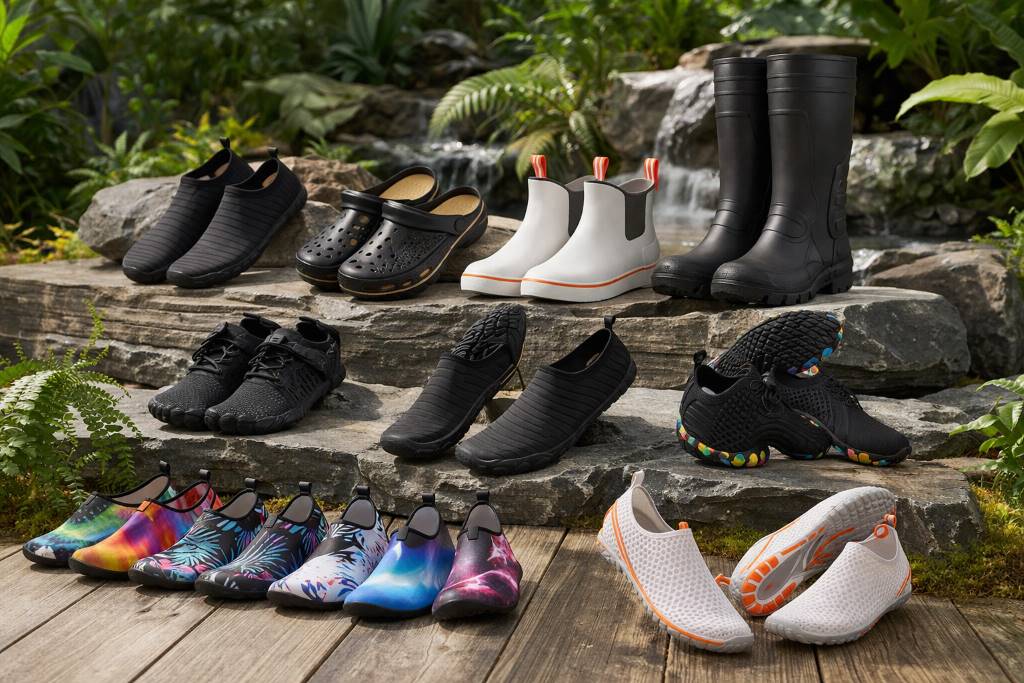
Wading Boots
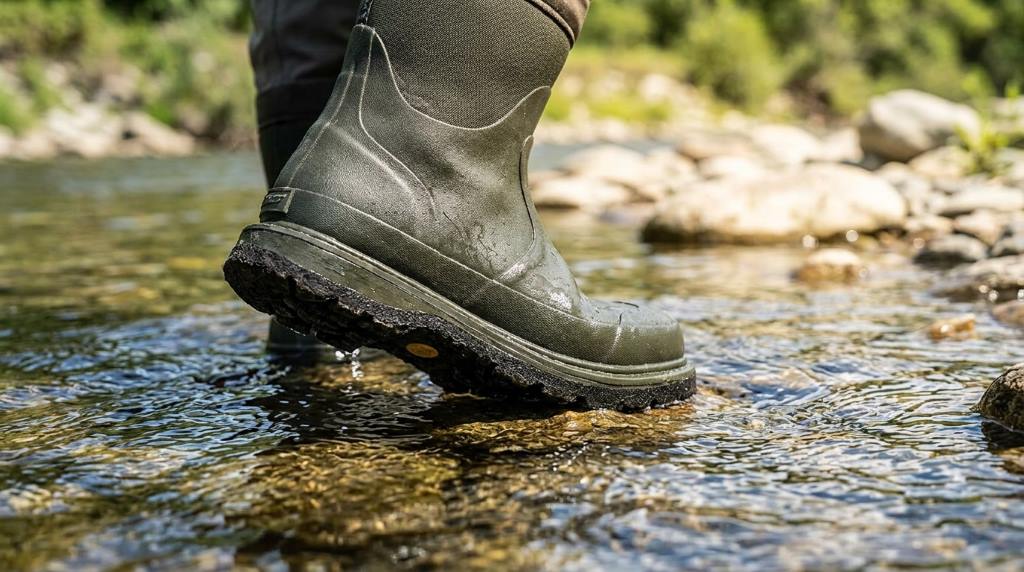
Wading boots are designed for fishing in rivers and streams. They provide ankle support and have thick soles for traction on slippery rocks. These boots often include cleats or studs for better grip.
They are typically made from durable materials like rubber or neoprene. Some models have built-in gravel guards to keep debris out. Wading boots are essential for fly fishing and cold-water angling.
For warm climates, lightweight wading boots with breathable linings are available. These are ideal for fishing in Florida’s shallow waters. They dry quickly and prevent overheating.
Deck Shoes
Deck shoes are designed for boat fishing and offer excellent traction on wet surfaces. They often have non-marking soles to protect boat decks. These shoes are typically low-cut for easy movement.
They are made from quick-drying materials and often feature drainage systems. Deck shoes are lightweight and comfortable for all-day wear. Some models include cushioned insoles for added comfort.
For anglers who fish in both fresh and saltwater, deck shoes are a versatile option. They are easy to clean and maintain. Look for models with reinforced toe caps for added durability.
Sandals
Fishing sandals are a popular choice for warm climates and casual angling. They offer breathability and quick-drying properties. Sandals with adjustable straps provide a secure fit.
Look for sandals with supportive footbeds and arch support. Some models include toe protection for rocky shores. These are ideal for fishing in shallow waters or from the shore.
Sandals are not suitable for rough terrain or cold water. They are best for short trips and relaxed fishing sessions. Always check for durable materials and sturdy soles.
Neoprene Shoes
Neoprene shoes are designed for cold-water fishing and offer excellent insulation. They are waterproof and provide a snug fit. These shoes are ideal for wading in cold streams or lakes.
They often include reinforced soles for traction and durability. Neoprene shoes are lightweight and flexible. They are a favorite among fly fishermen and cold-water anglers.
For warm climates, neoprene shoes may be too hot. They are best suited for cooler conditions. Look for models with breathable linings for added comfort.
Unique Considerations for Florida’s Climate
Florida’s warm and humid climate requires fishing shoes with breathable materials. Mesh and synthetic fabrics help keep your feet cool and dry. Quick-drying properties are essential for comfort.
The state’s diverse fishing environments include freshwater lakes, saltwater flats, and rocky shores. Versatile shoes that perform well in multiple conditions are ideal. Traction is crucial for slippery boat decks and wet surfaces.
For saltwater fishing, corrosion-resistant materials are a must. Saltwater can damage shoes over time, so durability is key. Look for shoes with anti-microbial treatments to prevent odors.
Florida’s sunny weather also means UV protection is important. Shoes with UV-resistant materials prevent cracking and fading. This extends the life of your footwear.
Anglers in Florida often fish in shallow waters, so drainage systems are beneficial. Shoes with mesh panels or drainage ports keep your feet dry. Lightweight designs are also popular for all-day comfort.
How to Test Fishing Shoes Before Buying
Always try on fishing shoes with the socks you plan to wear. Walk around to test the fit and comfort. Pay attention to any pressure points or discomfort.
Test the traction by walking on a wet surface. The soles should grip well without slipping. Check the flexibility of the shoes to ensure they allow natural movement.
If possible, test the shoes in water to see how they perform. Check for quick-drying properties and drainage. Ensure the materials are comfortable when wet.
Read reviews from other anglers to get insights on long-term performance. Look for feedback on durability, comfort, and traction. This can help you make an informed decision.
Consider the return policy in case the shoes don’t meet your expectations. Many retailers offer trial periods for testing footwear. This allows you to try the shoes in real fishing conditions.
Maintenance Tips for Longevity
Clean your fishing shoes after each use to remove dirt, salt, and debris. Use a mild soap and water for most materials. Avoid harsh chemicals that can damage the shoes.
Allow your shoes to air dry completely before storing them. Avoid direct sunlight, as it can cause cracking or fading. Store shoes in a cool, dry place to prevent mold and mildew.
For neoprene shoes, use a specialized cleaner to maintain the material. Regularly check for wear and tear, especially on the soles. Replace shoes when the traction or support is compromised.
Apply a waterproofing spray to extend the life of your shoes. This is especially important for leather or synthetic materials. Follow the manufacturer’s care instructions for best results.
Rotate between multiple pairs of shoes to prolong their lifespan. This allows each pair to dry and recover between uses. It also ensures you always have a backup pair ready.
Top Brands and Models to Consider
Simms is a leading brand for wading boots and fishing shoes. Their products are known for durability, comfort, and traction. The Simms Freestone Wading Boot is a popular choice among anglers.
Columbia offers a range of fishing shoes with advanced technologies. Their PFG (Performance Fishing Gear) line includes quick-drying and breathable options. The Columbia PFG Bahama Vent PFG is a top pick for warm climates.
Merrell is another trusted brand for outdoor footwear. Their fishing shoes combine comfort with rugged durability. The Merrell Hydro Moc is a favorite for its quick-drying properties.
Crocs provides lightweight and comfortable options for casual angling. Their specialized fishing line includes models with drainage and traction. The Crocs Literide Pac is ideal for short trips.
For budget-friendly options, consider brands like Frogg Toggs and HUK. They offer affordable fishing shoes with good performance. Always check for sales and discounts to get the best value.
Conclusion
Choosing the most comfortable fishing shoes for long trips requires careful consideration. Focus on comfort, durability, traction, and support to enhance your fishing experience. The right pair will keep your feet happy and your mind on the catch.
Florida’s unique climate and diverse fishing environments demand versatile footwear. Invest in quality shoes that meet your specific needs and preferences. Your feet will thank you after a long day on the water.
Explore top-rated options and test them in real conditions to find your perfect match. With the right fishing shoes, you can fish longer, harder, and more comfortably.
FAQ
What are the best fishing shoes for hot climates?
Look for shoes with breathable mesh materials and quick-drying properties.
How do I clean my fishing shoes?
Use mild soap and water, then allow them to air dry away from direct sunlight.
Are wading boots necessary for fly fishing?
Yes, wading boots provide the traction and support needed for fly fishing in rivers and streams.
Can I use running shoes for fishing?
Running shoes lack the traction and water resistance needed for fishing environments.
How often should I replace my fishing shoes?
Replace them when the traction, support, or durability is compromised, usually every 1-2 years.