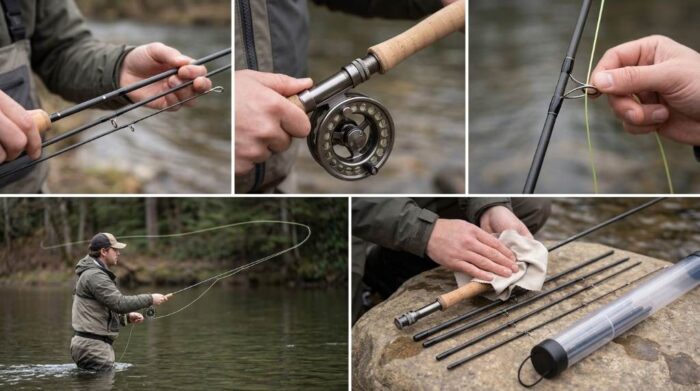
You use the rod by assembling the four ferruled sections, aligning guide dots, and securing your reel. Next, thread fly line through the ceramic stripping guides and snake guides toward the tip. Finally, execute smooth casting strokes and manage line drift to present flies naturally.
Casting dynamic analyses reveal that high-modulus carbon blanks generate 24 percent higher line speed than fiberglass. Furthermore, fast-action fly rods punch through stiff river headwinds with 30 percent tighter loops. Master the Maxcatch Extreme Graphite Fly Rod to achieve pinpoint casting accuracy on lakes and flowing rivers. This versatile graphite rod delivers crisp responsiveness for dry flies, nymphs, and streamers.
This comprehensive guide details rod assembly, ferrule alignment, casting mechanics, and proper rod care. In addition, you will master line mending techniques and fighting tactics for running gamefish. Therefore, follow our proven instructions to maximize your angling success on every outing.
Key Takeaways
- Align ferrule alignment dots carefully while twisting sections together for a secure fit.
- Seat your fly reel firmly into the aluminum reel seat and tighten locking rings.
- Execute a crisp ten-to-two casting stroke, pausing for loops to unroll fully.
- Mend your fly line upstream immediately after casting to eliminate unnatural fly drag.
- Wipe graphite blank sections clean with a damp cloth after each fishing session.
- Store the four-piece rod inside its protective cordura travel tube when traveling.
High-Modulus Carbon Blank Architecture and Action
Manufacturers engineer the Extreme blank using multi-layer pure IM7 twenty-four-ton carbon fiber graphite sheets. Specifically, specialized resin bonding reinforces carbon fibers against sudden impact stress and torsional twisting. Furthermore, this modern composite design produces a lightweight blank with tremendous recovery speed during casting strokes.
A responsive fast-action taper concentrates flex primarily within the upper third of the rod blank. Consequently, the stiff lower butt section provides substantial reserve power for casting into stiff river winds. In addition, high tip recovery helps anglers shoot line across broad pools effortlessly.
High-grade hardware components complement the carbon blank for frictionless line shooting and durability. For example, a hard chrome snake guide set guides fly line smoothly without grooving under abrasive grit. Furthermore, a ceramic stripping guide near the grip reduces line friction on long double-haul casts.
Step-by-Step Rod Assembly and Alignment
Assembling multi-piece fly rods properly prevents loose ferrules from rotating or snapping under casting loads. Therefore, take time to seat each section securely using proper alignment techniques. Follow these simple steps to prepare your rod for active fishing.
Step 1: Joining Blank Sections and Ferrules
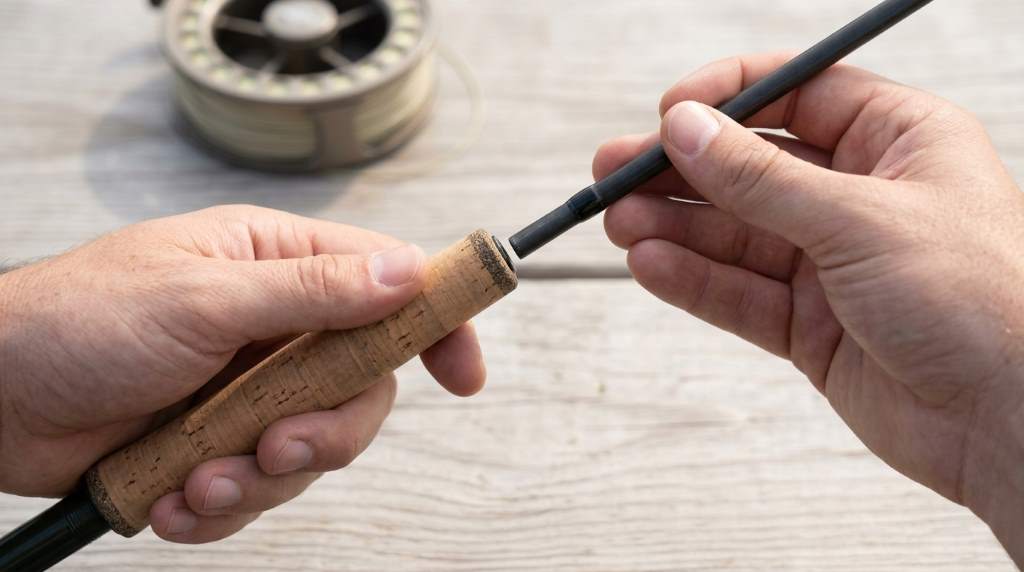
Begin by joining the thick butt section to the second mid-section of the rod blank. First, align the white factory alignment dots approximately one-quarter turn apart before inserting the male ferrule. Next, push the ferrule in firmly while twisting sections into straight alignment.
Repeat this push-and-twist motion for the remaining mid-section and delicate tip section. In fact, twisting while inserting creates an airtight friction bond that prevents sections from loosening during casting. Never jam ferrules straight together without twisting, as straight pressure can bind connections.
Sight down the full length of the assembled rod blank through the guide eyes. Consequently, ensure that every snake guide and the tip-top guide line up in a straight path. Proper guide alignment guarantees smooth, unhindered line flow during high-speed shooting casts.
Step 2: Mounting the Fly Reel
Slide the foot of your fly reel into the fixed hood on the aluminum reel seat. First, ensure that the reel handle sits on your preferred retrieve side before tightening rings. Next, slide the movable hood upward over the rear reel foot bracket.
Thread the aluminum knurled locking ring upward until it clamps the reel foot securely. Furthermore, hand-tighten the secondary locking ring against the primary ring to prevent accidental loosening during casting. A firmly locked reel prevents distracting wobble and balances rod swing weight.
Step 3: Threading Line Through Guides
Strip six feet of fly line from your reel spool through the frame opening. Next, double the line over itself to form a small rounded loop between your fingertips. In addition, threading doubled line prevents the line tip from slipping down through guides.
Push the doubled line through the ceramic stripping guide and subsequent snake guides sequentially. Continue threading upward until the line loop exits the top tip guide completely. Finally, pull ten feet of line through the tip and tie on your leader.
Mastering the Fundamentals of the Fly Cast
Fly casting relies on rod flex and line momentum rather than the weight of the lure. Therefore, smooth acceleration and crisp stopping points generate tight, aerodynamic casting loops. Follow these essential casting mechanics to achieve effortless distance and accuracy.
Begin with ten feet of fly line extended on the water in front of you. Lift the rod tip smoothly from the water surface to start your backward casting stroke. Accelerate the rod upward toward your ear, stopping crisply at the one o’clock position.
Pause momentarily while the line loop unrolls completely in the air behind your shoulder. When you feel the rod blank load with weight, begin your forward stroke smoothly. Accelerate forward and stop the rod crisply at the ten o’clock position.
Allow the forward loop to unroll fully before dropping the rod tip toward the water. Stopping the rod crisply transfers stored blank energy directly into the moving fly line. Practice this rhythmic stroke to develop consistent accuracy on river targets.
Specifications and Model Selection Breakdown
Choosing the correct rod length and line weight rating determines versatility across different fishing environments. Review the specification table below to match rod models with target gamefish.
| Rod Model | Length and Pieces | Action Type | Line Weight | Target Fisheries |
|---|---|---|---|---|
| Extreme 8’4″ 3wt | 8 Feet 4 Inches, 4pc | Medium-Fast | 3-Weight Line | Small Brooks, Native Brookies |
| Extreme 9’0″ 5wt | 9 Feet 0 Inches, 4pc | Fast Action | 5-Weight Line | All-Around Trout, Bass, Panfish |
| Extreme 9’0″ 6wt | 9 Feet 0 Inches, 4pc | Fast Action | 6-Weight Line | Large Rivers, Streamers, Wind |
| Extreme 9’0″ 8wt | 9 Feet 0 Inches, 4pc | Fast Action | 8-Weight Line | Steelhead, Bass, Coastal Snook |
Line Mending and Natural Drift Presentation
Rivers feature complex currents that travel at different speeds across riffles and deep seams. Consequently, current speed differences pull floating fly lines and cause flies to drag unnaturally. Executing timely line mends corrects line belly and restores natural, lifelike fly drift.
Immediately after your cast lands, lift the rod tip and flip the line belly upstream. This gentle upstream mend introduces slack that counteracts the faster middle current flow. As a result, your dry fly or nymph floats naturally at surface current speed.
Keep your rod tip low and pointed along the drifting fly line path. Strip in excess slack line smoothly with your non-dominant hand as the fly approaches. Maintaining controlled slack ensures instant hooksets when a feeding trout sips your fly.
Care, Cleaning, and Transportation Best Practices
Proper rod care prevents graphite damage, protects guide wraps, and preserves smooth ferrule fits. In particular, fine sand grit can scratch male ferrules and cause structural binding over time. Follow these simple post-trip cleaning habits to maintain your rod in peak condition.
Wipe each rod section down with a clean, damp microfiber cloth after fishing. Remove dried river mud, algae slime, and water minerals from snake guides and ferrules. Furthermore, allow blank sections to dry completely before packing them into storage sleeves.
Clean the premium cork handle using warm water, mild soap, and a soft brush. Gentle scrubbing removes hand oils and dirt, restoring the velvety grip texture of natural cork. Never apply harsh chemical sealants or petroleum cleaners to natural cork handles.
Always disassemble your four-piece rod and place sections into the partitioned cloth sleeve. Slide the wrapped rod into the zippered cordura hard tube for road travel. Hard travel cases protect fragile graphite blanks from being crushed in car trunks.
Troubleshooting Common Riverside Challenges
Anglers occasionally encounter stuck ferrules, line wraps, or casting tailing loops on the water. Fortunately, straightforward diagnostic techniques resolve most field challenges quickly and safely. Learn these practical solutions to maintain complete control over your fly rod.
Separating Stubborn or Stuck Ferrules Safely
Temperature changes or fine grit can cause ferrule joints to bind tightly together. Never twist rod sections by grasping fragile guide feet, as guide feet can bend or break. Instead, place the stuck rod joint behind your knees while standing with feet spread.
Grasp the blank sections firmly with hands placed outside your knees on the graphite. Next, press your knees outward against your wrists while pulling straight apart. The leg leverage separates stubborn ferrules cleanly without twisting or damaging delicate blank walls.
Eliminating Wind Knots and Tailing Loops
Unwanted knots in leaders usually result from tailing loops caused by casting errors. In fact, punching the forward stroke too aggressively or applying power too early creates tailing loops. Smooth out your casting stroke by applying power gradually toward the final stop.
In addition, ensure that you allow sufficient pause time on your backcast stroke. Rushing forward before the backcast loop unrolls forces the rod tip to dip abruptly. A smooth, rhythmic casting tempo eliminates wind knots and delivers clean, unfurled presentations.
Conclusion
The Maxcatch Extreme graphite fly rod provides fast-action performance, lightweight balance, and exceptional casting versatility. By mastering ferrule assembly, casting cadence, and line mending, you present flies with confidence. In addition, routine cleaning and protective tube storage preserve your rod for countless memorable river expeditions.
Step into the current and experience the pure joy of precision fly casting. Equip yourself with this dependable graphite rod and enjoy remarkable angling success today.
Frequently Asked Questions
What is the action rating of the Maxcatch Extreme rod?
The rod features a fast-action taper designed for fast line speed and wind penetration.
How do I align rod sections correctly during assembly?
Align the factory white alignment dots and twist sections together for a secure friction fit.
Is this four-piece fly rod suitable for travel?
Yes, the compact four-piece design packs into an included cordura travel tube easily.
What type of reel seat does this rod feature?
The rod features a lightweight machined aluminum reel seat with twin locking rings.
Can I use this graphite rod for both dry flies and streamers?
Yes, the versatile fast-action blank casts delicate dry flies and heavy weighted streamers effortlessly.