

Travel fishing is one of the most rewarding outdoor activities. You get to explore new waters, enjoy fresh scenery, and catch fish in places you have never visited before. However, packing the right gear can be a real challenge. One item that many anglers overlook is the fishing net. Specifically, a folding small fishing net can make a huge difference on any trip. It is compact, lightweight, and easy to carry. But how do you choose the right one? This guide will walk you through everything you need to know.
Why a Folding Fishing Net Matters for Travel
Standard fishing nets are bulky. They take up too much space in your bag. Therefore, they are not ideal for travel. A folding net, however, collapses into a much smaller shape. You can tuck it into a backpack or even a carry-on bag. This makes it perfect for anglers who fly to fishing destinations or hike to remote lakes and rivers.
Additionally, a folding net helps you land fish quickly and safely. It reduces the amount of time a fish spends out of water. This is especially important if you practice catch-and-release fishing. A good net protects the fish’s protective slime coat, which helps the fish survive after release.
In short, the right folding net is not just a convenience. It is a tool that improves both your experience and your impact on the environment.
Key Factors to Consider When Choosing a Folding Fishing Net
There are many folding nets on the market. Not all of them are created equal. However, a few key factors will help you narrow down your choices quickly and confidently.
Net Size and Hoop Diameter
The size of the net matters a great deal. A small hoop works well for trout, panfish, or bass. However, if you plan to catch larger species like salmon or pike, you will need a bigger opening. Most travel nets have a hoop diameter between 12 and 20 inches. Think about the fish you are targeting before you buy.
Also, consider the depth of the net bag. A deeper bag keeps the fish securely inside while you remove the hook. A shallow bag can let the fish escape before you are ready. Therefore, aim for a net bag that is at least 18 inches deep for medium-sized fish.
Frame Material and Durability
The frame is the backbone of your net. It needs to be strong yet lightweight. Most folding nets use aluminum, carbon fiber, or fiberglass frames. Each material has its own advantages.
Aluminum frames are affordable and widely available. They are also quite durable. Carbon fiber frames, on the other hand, are the lightest option. They are ideal if you are hiking long distances to your fishing spot. Fiberglass frames fall somewhere in between. They offer decent strength at a moderate price.
Additionally, check the locking mechanism on the folding joint. A weak hinge can cause the net to collapse at the worst possible moment. Look for nets with a solid, positive lock that clicks firmly into place.
Net Mesh Type and Fish Safety
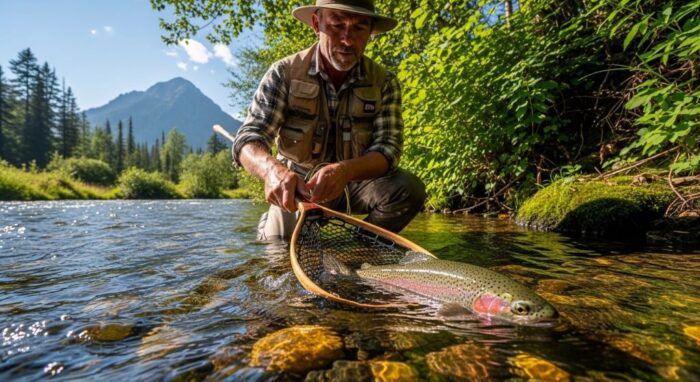
The mesh material directly affects the fish’s health. Rubber mesh is one of the best choices for catch-and-release fishing. It is soft, gentle on scales, and does not strip away the fish’s protective slime coat. Furthermore, hooks rarely get tangled in rubber mesh, which saves you a lot of frustration.
Nylon mesh is more common and less expensive. However, it can be rough on fish skin and hooks tend to snag in it easily. If you mostly keep the fish you catch, nylon mesh is a perfectly fine option. Coated nylon mesh is a middle-ground choice. It is gentler than standard nylon but costs less than rubber.
Therefore, match your mesh choice to your fishing style. If you practice catch-and-release, always go with rubber mesh.
Handle Length and Reach
Handle length is often overlooked, but it plays a big role in your comfort. A longer handle gives you more reach when scooping a fish from the water. This is especially useful when fishing from a kayak, dock, or steep riverbank.
However, a longer handle means a bulkier net when folded. For backpacking trips, a shorter telescoping handle is often a better trade-off. Many travel nets offer telescoping handles that extend from around 20 inches to 40 inches. This gives you flexibility without adding too much bulk to your pack.
Weight and Portability for the Traveling Angler
When you travel, every ounce counts. A heavy net will wear you down over a long hike. Therefore, look for nets that weigh less than one pound when possible. Many carbon fiber folding nets weigh as little as 6 to 10 ounces. That is extremely light for such a useful piece of gear.
Additionally, think about how the net folds. Some nets collapse flat, like a foldable frisbee. Others fold in half along the handle. Flat-folding nets are generally easier to pack in a side pocket of a backpack. Half-folding nets, however, tend to have stronger frames overall.
Check if the net comes with a carrying case or clip. Many travel nets include a magnetic release clip that attaches to your vest or belt loop. This keeps the net within easy reach while you fish. It also prevents the net from bouncing around inside your bag.
Matching Your Net to Your Water Environment
The type of water you fish in should influence your net choice. Freshwater and saltwater put very different demands on your gear.
Freshwater Fishing Nets
For freshwater fishing, almost any folding net will work well. You need to focus more on size and mesh type. Trout streams call for a smaller, rubber-mesh net. Bass fishing in lakes might require a slightly larger hoop. Additionally, freshwater nets do not need special corrosion resistance, which makes them less expensive overall.
Saltwater Fishing Nets
Saltwater is much harder on gear. It causes rust and corrosion on metal parts over time. Therefore, if you are fishing in the ocean or coastal areas, choose a net with anodized aluminum or coated stainless steel components. The mesh should also resist salt degradation. Rubber mesh holds up very well in saltwater. Rinse your net with fresh water after every saltwater use to extend its life significantly.
Budget Considerations and Value for Money
Folding fishing nets range widely in price. You can find basic models for under $20. High-end carbon fiber nets with rubber mesh can cost $80 or more. The right choice depends on how often you fish and how much you value specific features.
If you fish a few times a year on vacation, a mid-range net in the $30 to $50 range is probably sufficient. However, if you travel frequently and fish regularly, investing in a premium net makes more sense. A better net will last longer, perform better, and protect your fish more effectively.
Also, consider the long-term cost. A cheap net that breaks after two trips costs more in the long run than a quality net that lasts for years. Therefore, read reviews carefully and pay close attention to comments about durability.
Quick Checklist: Top Features to Look For
Before making your final decision, run through this quick checklist. A good travel fishing net should have:
- A lightweight frame, ideally under 1 pound
- A reliable folding mechanism with a firm, positive lock
- Rubber or coated mesh for fish safety
- A hoop size appropriate for your target species
- Corrosion-resistant materials if used in saltwater
- A compact folded size that fits your bag or pack
- A carrying clip or case for easy transport
Tips for Evaluating Brands and Reading Reviews
Once you know what features you need, it is time to research specific products. Start by reading reviews on fishing forums and retailer websites. Pay attention to reviews from anglers who fish in similar conditions to yours. A net that works great in calm lake fishing might not hold up well on a fast-moving river.
Look for brands that specialize in fishing gear rather than generic outdoor equipment. Brands with a strong fishing focus tend to understand the specific demands anglers place on their nets. Additionally, check if the brand offers a warranty or replacement policy. A company that stands behind its product is usually a sign of quality.
Finally, if possible, visit a local tackle shop and hold the net in your hands before buying. The feel of a net matters. You want it to feel sturdy and comfortable to hold. Online purchases are convenient, but nothing replaces the experience of testing gear in person.
Conclusion
Choosing the right folding small fishing net for travel does not have to be complicated. The key is to match the net to your specific needs. Consider the size of fish you target, the type of water you fish in, and how far you need to carry your gear. Look for a lightweight frame, a reliable folding mechanism, and fish-friendly mesh material.
Additionally, set a realistic budget and invest in quality where it matters most. A good folding net will serve you well for many seasons. It will help you land more fish, protect the fish you release, and make every travel fishing adventure more enjoyable. Therefore, take your time, do your research, and choose a net that you can rely on wherever your travels take you.
Frequently Asked Questions
1. What size folding fishing net is best for trout fishing?
For trout fishing, a net with a hoop diameter of 12 to 16 inches and a bag depth of at least 18 inches works well. A rubber mesh bag is strongly recommended to protect the fish’s slime coat during catch-and-release fishing.
2. Are rubber mesh nets better than nylon for travel fishing?
Rubber mesh nets are generally better for catch-and-release fishing because they are gentler on fish and tangle less with hooks. However, they tend to cost more. Nylon mesh is a good budget-friendly choice if you plan to keep the fish you catch.
3. Can I use a freshwater folding net in saltwater?
You can use it temporarily, but it is not ideal. Saltwater corrodes metal parts much faster than freshwater. If you fish in saltwater regularly, choose a net with corrosion-resistant materials. Always rinse any net thoroughly with fresh water after saltwater use.
4. How do I know if a folding net’s locking mechanism is reliable?
Test the lock by opening and closing the net several times in the store. It should click firmly into the open position with no wobble. Also read user reviews and look specifically for comments about the hinge or locking joint failing during use.
5. What is the lightest type of folding fishing net for backpacking?
Carbon fiber frame nets are the lightest option available. Many quality carbon fiber folding nets weigh between 6 and 10 ounces. Combined with a rubber mesh bag, they offer the best balance of lightweight portability and fish protection for backpacking fishing trips.
Related Topics:
The Importance of Power Poles in Fishing: A Game-Changer for Anglers
Electronic Fish Finder Battery Care: The Ultimate Guide to Maximizing Performance and Longevity


