Spending a day on the water is one of life’s great pleasures. Whether you are fishing from a kayak or a boat, you are exposed to sun, wind, spray, and changing weather. One of the most important pieces of gear you can wear is a good fishing hat. It may seem like a small detail, but the right hat protects your health, improves your comfort, and keeps you safe on the water.
However, not every hat is suitable for kayak or boat fishing. There are many options on the market, and choosing the wrong one can leave you sunburned, overheated, or uncomfortable. Therefore, this guide will help you understand exactly what to look for when selecting a fishing hat for kayak and boat fishing safety.
Why a Fishing Hat Matters for Water Safety
Many anglers focus on rods, reels, and tackle when preparing for a fishing trip. They often overlook the importance of proper headwear. However, a fishing hat serves several key safety functions that go well beyond style.
The sun is much stronger on the water than on land. Water reflects UV rays back at you, which doubles your exposure. This increases the risk of sunburn, heat exhaustion, and long-term skin damage. A quality fishing hat shields your face, ears, and neck from these harmful rays.
Additionally, glare from the water surface can impair your vision. A hat with a wide or structured brim reduces this glare significantly. This helps you spot fish, read the water, and stay aware of obstacles around your kayak or boat. Therefore, a good fishing hat is truly a safety tool, not just an accessory.
Understanding UPF Ratings and Sun Protection
When shopping for a fishing hat, you will often see a UPF rating on the label. UPF stands for Ultraviolet Protection Factor. It measures how much UV radiation a fabric blocks. A UPF rating of 50 means the fabric blocks 98 percent of UV rays. This is the highest level of sun protection available in clothing.
For kayak and boat fishing, you should look for a hat with a UPF rating of at least 30. A rating of 50 or higher is ideal. However, keep in mind that UPF ratings apply to the fabric itself. Areas not covered by the hat, such as your chin and lower neck, will still need sunscreen.
Additionally, the color and weave of the fabric affects UV protection. Darker colors and tightly woven fabrics generally offer better protection. Lightweight performance fabrics used in fishing hats are often treated to enhance their UPF rating. Therefore, always check the label before purchasing.
Choosing the Right Brim Style and Size
The brim of a fishing hat plays a major role in how well it protects you. Different brim styles are suited to different fishing environments. Understanding the options will help you make a better choice.
Wide Brim Hats
Wide brim hats offer the most coverage. They protect your face, ears, and the back of your neck all at once. These hats are excellent for long days on open water where the sun is relentless. However, they can catch wind easily, which can be a problem on a fast-moving boat or in gusty conditions.
Bucket Hats
Bucket hats have a shorter, downward-sloping brim that surrounds the entire hat. They offer good all-around coverage and are more compact than wide brim styles. Additionally, they are easy to pack and often made from quick-dry materials. Many anglers prefer bucket hats for kayak fishing because they stay on more securely in light wind.
Baseball and Trucker Caps
Baseball caps and trucker caps are popular among boat anglers. They are lightweight, breathable, and easy to wear. However, they only protect the front of your face. Your ears and the back of your neck remain exposed. Therefore, if you choose a cap style hat, you should also use sunscreen or add a neck gaiter for additional coverage.
Boonie Hats
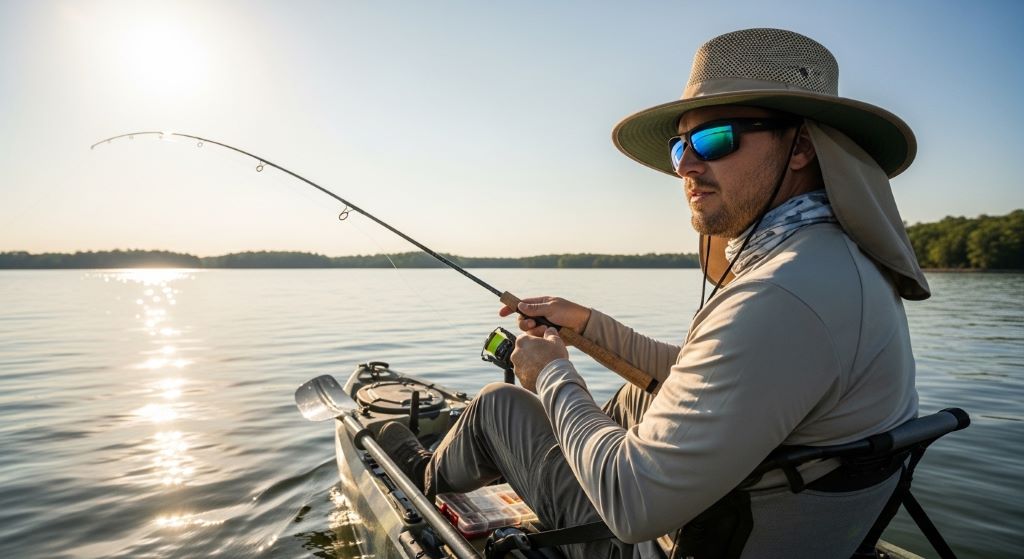
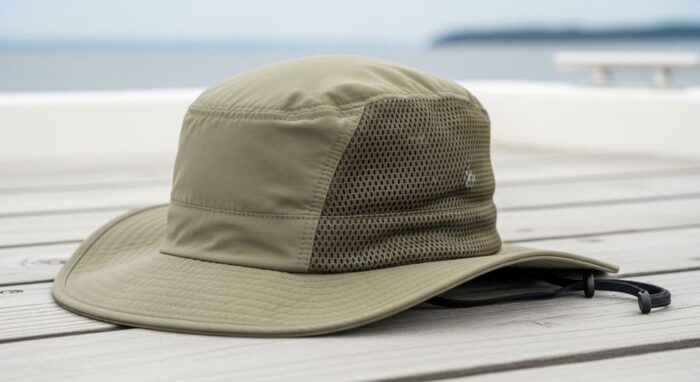
Boonie hats are a popular choice for serious anglers and outdoor enthusiasts. They have a wide brim similar to a bucket hat but with a more structured shape. Many boonie hats also feature a chin strap, which is very useful on the water. Additionally, they often have ventilation eyelets that help keep your head cool in hot conditions.
The Importance of a Chin Strap or Retention System
One of the most overlooked features of a fishing hat is a chin strap or hat retention cord. On the water, wind is a constant challenge. A gust of wind can easily send a hat flying into the water, leaving you suddenly exposed to harsh sun and glare.
For kayak fishing, this is especially important. Paddling generates movement and wind. When you lean forward to cast or retrieve a fish, your hat can shift or fall off. A chin strap keeps your hat secure in all conditions. Additionally, some hats include a simple adjustable cord rather than a full chin strap. Either option is better than no retention system at all.
For boat fishing at higher speeds, a chin strap becomes even more essential. The wind created by a moving boat is far stronger than natural wind alone. Therefore, always choose a hat with some form of retention system if you plan to fish from a moving vessel.
Material and Breathability: Staying Cool and Dry
The material of your fishing hat affects how comfortable you feel over a long day on the water. Fishing generates heat, especially when you are paddling a kayak or working an anchor line. The right material helps regulate your body temperature and keeps moisture away from your skin.
Quick-Dry Nylon and Polyester
Quick-dry fabrics like nylon and polyester are ideal for water-based activities. They dry rapidly when wet, whether from sweat, rain, or spray. Additionally, they are lightweight and easy to wash. Many performance fishing hats are made from these materials for exactly these reasons.
Mesh Panels and Ventilation
Hats with mesh panels or ventilation eyelets allow air to flow through. This keeps your head cooler on hot, sunny days. However, mesh panels may offer slightly less UV protection than solid fabric. Therefore, look for hats that combine ventilation with a high UPF rating for the best of both features.
Cotton and Waxed Canvas
Cotton hats are soft and comfortable but absorb water easily. They take a long time to dry, which can make them heavy and uncomfortable after exposure to rain or spray. Waxed canvas hats offer water resistance and durability. However, they tend to be heavier and warmer. These materials are better suited for cooler conditions or covered boat fishing rather than active kayak paddling.
Fit and Adjustability for an Active Day on the Water
A fishing hat must fit well to do its job properly. A hat that is too loose will blow off in the wind. A hat that is too tight will cause headaches and discomfort over a long day. Therefore, fit is one of the most important factors to consider when making your selection.
Look for hats with adjustable sizing systems. Many fishing hats feature a drawstring, elastic band, or hook-and-loop strap at the back. These allow you to customize the fit for your head size and the conditions of the day. Additionally, an interior sweatband helps absorb moisture and keeps the hat from slipping during active movement.
For kayak anglers who wear a helmet or use a headlamp attachment, compatibility is another factor to consider. Some fishing hats are designed to be worn comfortably over a thin balaclava or under a hat brim light. Therefore, think about how you will use your hat in combination with other gear.
Color Choices and Their Practical Impact
The color of your fishing hat matters more than you might think. It affects both your comfort and your safety on the water.
Light colors like white, tan, and light gray reflect sunlight and keep your head cooler. They are ideal for fishing in hot, sunny climates. However, they can show dirt and stains more easily. Dark colors absorb heat but may provide slightly better UV protection to the fabric layer beneath.
From a safety perspective, bright or high-visibility colors like orange or yellow can help other boaters and rescue personnel spot you more easily in an emergency. Additionally, some anglers prefer neutral or camouflage patterns to blend into the environment and avoid startling fish. Therefore, consider your fishing style and environment when choosing a color.
Additional Features Worth Considering
Beyond the basics, there are several additional features that can make a fishing hat even more functional and safe for kayak and boat fishing.
- Neck flap or cape: Some hats come with a detachable fabric flap that covers the back of the neck. This provides excellent sun protection for those long days when sunscreen is not enough.
- Floating design: A few fishing hats are designed to float if they fall into the water. This is a very useful feature for kayak anglers who may capsize or lean too far over the side.
- Insect protection: Some fishing hats are treated with permethrin, an insect repellent. This is helpful in areas where mosquitoes and flies are prevalent.
- Polarized brim insert: A few hats include a built-in polarized visor or brim insert to help reduce glare even further.
- Moisture-wicking sweatband: An interior sweatband made from moisture-wicking fabric helps keep sweat out of your eyes during active paddling or fishing.
Top Tips for Kayak Fishing Hats Specifically
Kayak fishing presents unique challenges compared to boat fishing. You are lower to the water, which means you are closer to reflected glare. You also move more actively, paddling, shifting your weight, and reaching in various directions. Therefore, your hat needs to stay secure through all of this movement.
Additionally, if you capsize, your hat may go into the water. Choosing a hat that floats and dries quickly is very practical for kayak anglers. Lightweight hats are also preferable because they add less weight to your head during long paddling sessions.
Consider how the brim of your hat interacts with your paddle stroke. A very wide brim may interfere with a high-angle paddle stroke. In that case, a slightly shorter-brimmed boonie or bucket hat may work better. Furthermore, avoid hats with very stiff brims that cannot flex when you turn your head quickly to check behind you.
Top Tips for Boat Fishing Hats Specifically
Boat fishing allows for a wider variety of hat styles since you are not paddling. However, you may be traveling at speed, which increases wind exposure significantly. Therefore, wind resistance and secure fit are the top priorities for boat anglers.
Wide brim hats work well on stationary or slow-moving boats. However, on a fast center-console or offshore vessel, a low-profile cap with a secure chin strap is often a better choice. Additionally, if you fish in saltwater, make sure your hat is made from materials that resist salt corrosion and can be easily rinsed clean.
Boat anglers may also want to consider a hat that pairs well with polarized sunglasses. A structured brim that shades the eyes improves the effectiveness of polarized lenses by blocking overhead light. Furthermore, a longer bill at the front of a cap style hat serves this purpose very well.
Conclusion
Selecting the right fishing hat for kayak and boat fishing safety is not complicated, but it does require careful thought. The hat you choose should protect you from UV rays with a high UPF rating. It should have the right brim style for your fishing environment. It must fit securely, especially in windy conditions, and ideally include a chin strap or retention system.
Additionally, the material should be breathable, quick-drying, and suitable for the climate where you fish. Extra features like neck flaps, floating designs, and moisture-wicking sweatbands can add real value for active anglers. Furthermore, the color you choose can affect both your comfort in the heat and your visibility in an emergency.
Whether you prefer a wide brim hat, a boonie, a bucket hat, or a performance cap, the most important thing is that your hat keeps you protected and comfortable on the water. Therefore, invest the time to find the right one. A well-chosen fishing hat is one of the best safety decisions you can make before heading out on the water.
Frequently Asked Questions
1. What UPF rating should a fishing hat have for full sun protection?
For maximum sun protection on the water, look for a fishing hat with a UPF rating of 50 or higher. This blocks 98 percent of UV rays. A minimum rating of UPF 30 is acceptable, but higher is always better. Additionally, remember that the hat only protects the areas it covers, so use sunscreen on exposed skin as well.
2. Are wide brim hats suitable for kayak fishing?
Wide brim hats offer excellent sun protection and work well for kayak fishing in calm or light wind conditions. However, a very wide brim can interfere with paddling and may catch wind during gusts. Therefore, many kayak anglers prefer a boonie or bucket hat with a medium brim and a chin strap for a better balance of protection and practicality.
3. Why is a chin strap important on a fishing hat?
A chin strap prevents your hat from blowing off in the wind, which is a common problem both on kayaks and moving boats. Losing your hat on the water exposes you suddenly to intense sun and glare. Additionally, retrieving a hat that has fallen overboard wastes time and energy. A chin strap is a simple feature that makes a big safety difference.
4. What is the best hat material for hot and humid fishing conditions?
For hot and humid conditions, look for hats made from lightweight nylon or polyester with mesh ventilation panels. These materials are breathable, quick-drying, and help keep your head cool. Additionally, light-colored hats reflect sunlight and reduce heat absorption. Avoid cotton hats in humid environments, as they absorb moisture and take a long time to dry.
5. Can I use a regular sun hat for fishing instead of a dedicated fishing hat?
A regular sun hat can provide some protection, but dedicated fishing hats are designed with specific features that make them safer and more practical on the water. These include quick-dry fabrics, chin straps, higher UPF ratings, and compatibility with sunglasses and other fishing gear. Therefore, while a regular sun hat is better than nothing, a purpose-built fishing hat will serve you much better during a full day on the water.
Related Topics:
Fishing Hats with Neck Flaps for Sun Protection: The Ultimate Guide to Staying Safe and Stylish on the Water
Unpacking the Purpose: Water Worlds vs. Terrestrial Trails