Landing a fish is the most exciting part of any fishing trip. Yet many anglers lose their catch at the last moment. A best fishing net can make all the difference. Studies show that using the right net increases landing success by up to 40 percent. Minnesota’s cold waters demand gear that handles both fish and weather well.
The right net ensures the fish stays safe and unharmed during the process. It also protects your line and hook from damage. Anglers in Minnesota often face large pike or walleye that require sturdy nets. A good net also reduces stress on the fish which helps with catch and release practices.
Why Using the Right Fishing Net Matters
A quality net prevents fish from escaping as you bring them aboard. It also minimizes harm to the fish’s scales and fins. This is especially important for catch and release fishing. Proper nets are designed to support the fish’s weight without causing injury.
In Minnesota the climate can be harsh on gear so durability is key. Nets made from strong materials like rubber or knotless mesh are ideal. They are gentle on fish and resist wear from cold water. A net with a long handle helps reach fish in deep water or from a distance.
The size of the net should match the type of fish you target. Small nets work for panfish while larger ones are needed for muskie or catfish. A net that is too small can damage the fish or break under pressure. Always pick a net that balances strength with flexibility.
Choosing the Best Fishing Net for Your Needs
Material Matters
Rubber nets are gentle on fish and do not remove their protective slime. This slime protects fish from infections and stress. Knotless mesh is another great option for reducing harm to the fish. Avoid nets with large knots as they can snag fins or hooks.
Nylon nets are strong and last long but can harm fish if not used carefully. They are best for keeping fish you plan to eat. For catch and release always use rubber or soft mesh. These materials are safer for the fish and the environment.
Handle Length and Design
Long handles provide better reach and control when landing fish. They are essential for fishing from shore or a high boat deck. Telescopic handles offer adjustability for different fishing scenarios. Short handles work well for kayak or canoe fishing where space is limited.
A handle with a non slip grip ensures a firm hold even when wet. Some nets come with ergonomic designs to reduce hand fatigue. Always check the handle’s strength before buying. A weak handle can break under the weight of a big fish.
Net Shape and Size
Round nets are great for scooping up fish quickly and securely. They are ideal for beginners and for fishing in tight spaces. Hoop nets with flat bottoms work well for larger fish like salmon or trout. They provide more support and prevent the fish from flopping out.
The depth of the net also matters for keeping fish inside. Shallow nets may let fish jump out during the landing process. Deeper nets are better for active fish that move a lot. Always match the net size to the fish you expect to catch.
Step by Step Guide to Safely Land Your Catch
Preparing Your Gear
Before you start fishing ensure your net is within easy reach. Keep it untangled and ready to use at a moment’s notice. Check the net for any tears or damage that could harm the fish. A damaged net can cause injuries or allow the fish to escape.
Wear gloves to protect your hands from sharp fins or hooks. Gloves also provide a better grip on slippery fish. Keep a pair of pliers handy for removing hooks quickly. This reduces the time the fish spends out of water.
Positioning the Net
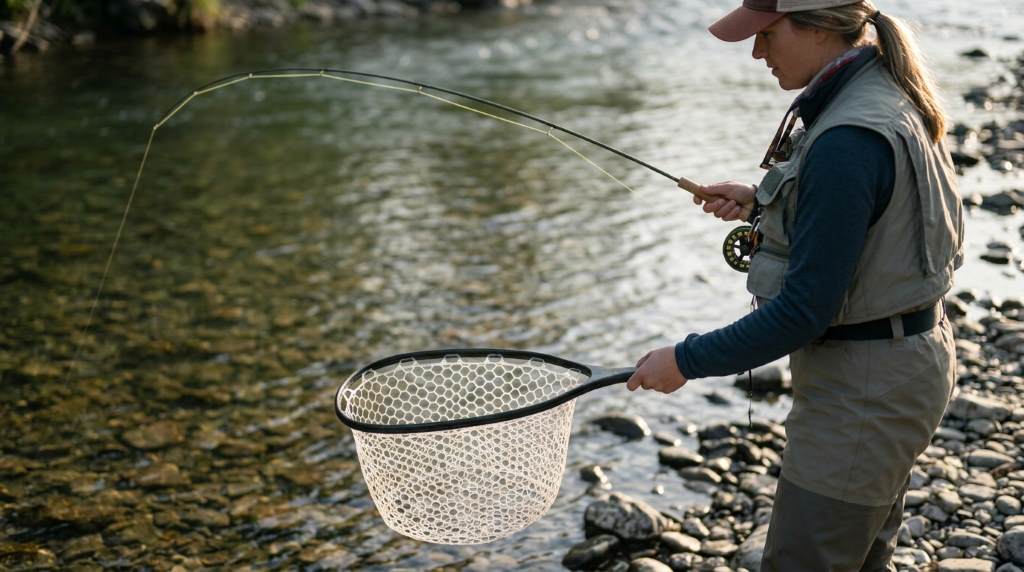
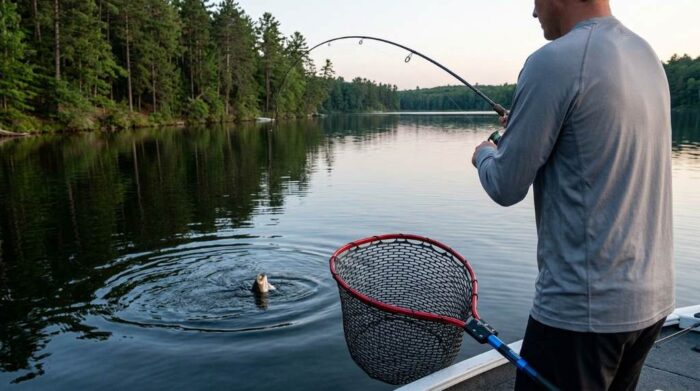
As you reel in the fish position the net in the water near the fish. Avoid swinging the net at the fish as this can cause panic. Instead lower the net gently into the water and guide the fish into it. This method is less stressful for the fish.
Keep the net submerged to prevent the fish from seeing it. Fish can get spooked by the sight of a net above water. Move the net slowly and steadily to avoid startling the fish. Patience is key to a successful landing.
Scooping the Fish
Once the fish is close enough lift the net to cradle the fish. Use a smooth upward motion to bring the fish out of the water. Avoid jerking the net as this can cause the fish to flip out. A steady lift ensures the fish stays secure.
For larger fish you may need to use both hands to support the net. This prevents the net from breaking under the fish’s weight. Always keep the fish’s head pointed into the net. This position makes it harder for the fish to escape.
Handling the Fish
Once the fish is in the net keep it in the water if you plan to release it. This allows the fish to breathe and reduces stress. Use wet hands or gloves to handle the fish to protect its slime layer. Never squeeze the fish as this can cause internal injuries.
If you need to remove the hook do so quickly and carefully. Use pliers to back the hook out if it is deeply embedded. For catch and release minimize the time the fish spends out of water. A quick process increases the fish’s chances of survival.
Unique Tips for Minnesota’s Climate
Minnesota’s cold waters can make fish sluggish during winter months. Use a net with a fine mesh to prevent small fish from slipping through. In summer the water is warmer and fish are more active. A deeper net helps keep lively fish from jumping out.
Ice fishing requires special nets designed for cold conditions. These nets often have shorter handles for use in ice holes. Always check the net’s material for cold weather durability. Some materials can become brittle in freezing temperatures.
For shore fishing in Minnesota’s lakes a long handled net is essential. It allows you to reach fish without wading into cold water. A net with a wide opening helps scoop up fish in shallow areas. Always be mindful of the wind which can make landing fish more challenging.
When fishing for walleye or pike use a net with a larger hoop. These fish are strong and can put up a fight. A sturdy net prevents them from breaking free. For panfish a smaller net is sufficient and easier to maneuver.
Common Mistakes to Avoid
One common mistake is using a net that is too small for the fish. This can cause the fish to get tangled or injured. Always choose a net that is slightly larger than the fish you expect to catch. A bigger net provides more room for error.
Another mistake is swinging the net at the fish. This can scare the fish and make it harder to land. Instead guide the fish into the net with gentle movements. Patience and control are more effective than force.
Many anglers forget to wet their hands before handling fish. Dry hands can remove the fish’s protective slime layer. Always wet your hands or wear gloves when handling fish. This simple step helps keep the fish healthy.
Leaving the fish out of water for too long is another common error. Fish need water to breathe and can suffocate quickly. Always keep the fish in the water or return it as soon as possible. This is especially important for catch and release fishing.
Maintaining Your Fishing Net
After each use rinse your net with fresh water to remove dirt and debris. This prevents the buildup of algae and other contaminants. Store the net in a dry place to avoid mold and mildew. Proper care extends the life of your net.
Check the net regularly for signs of wear or damage. Repair any tears or holes promptly to prevent further damage. Replace the net if it becomes too worn to use safely. A well maintained net performs better and lasts longer.
For rubber nets use a mild soap to clean them if needed. Avoid harsh chemicals that can damage the material. Dry the net completely before storing it. This prevents the growth of bacteria and odors.
Best Practices for Catch and Release
Catch and release fishing helps preserve fish populations for future generations. Always use a net that minimizes harm to the fish. Rubber or knotless mesh nets are the best choices. These materials reduce the risk of injury and stress.
Handle the fish as little as possible and always with wet hands. This protects the fish’s slime layer which is essential for its health. Use pliers to remove hooks quickly and gently. Avoid touching the fish’s gills or eyes.
Return the fish to the water as soon as possible. Hold the fish upright in the water until it swims away on its own. This ensures the fish has recovered enough to survive. Never throw the fish back into the water as this can cause injury.
If the fish is deeply hooked consider cutting the line instead of removing the hook. This reduces the stress and injury to the fish. Use barbless hooks to make hook removal easier. These small changes can make a big difference in the fish’s survival.
Conclusion
Landing a fish safely requires the right gear and techniques. A best fishing net is an essential tool for any angler. It increases your chances of success while protecting the fish. By following these tips you can improve your fishing experience and help conserve fish populations.
Remember to choose a net that matches your fishing style and target species. Proper maintenance and care will extend the life of your net. Always prioritize the safety and well being of the fish. Happy fishing and tight lines!
FAQ
What is the best material for a fishing net?
Rubber is the best material for catch and release as it is gentle on fish.
How do I choose the right net size?
Match the net size to the type of fish you plan to catch.
Can I use a nylon net for catch and release?
It is not recommended as nylon can harm the fish’s slime layer.
How do I clean my fishing net?
Rinse it with fresh water and store it in a dry place.
What is the best way to handle a fish?
Use wet hands or gloves and minimize the time the fish spends out of water.