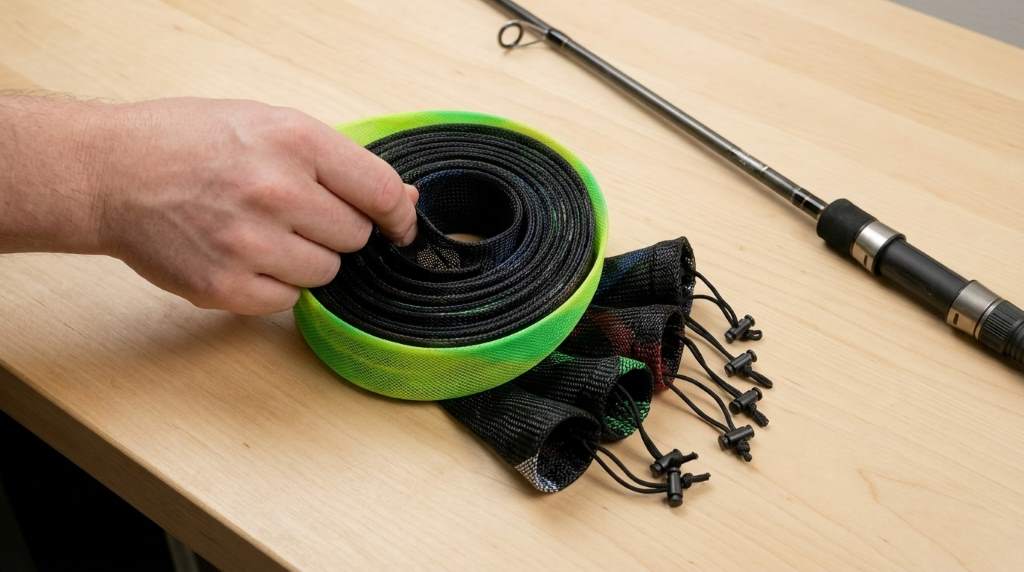
You use the rod sock by compressing the braided sleeve and sliding it over the tip. Next, slide the mesh sleeve down the blank toward the reel seat and fold the collar. Finally, secure the elastic retention strap around the reel handle to lock the protective sock in place.
Angler equipment surveys show braided sleeves reduce guide tangles by 84 percent in boat rod lockers. Furthermore, protective rod socks prevent 62 percent of blank scuffs caused by vehicle transit vibrations. Use the SF Fishing Rod Sock to protect delicate blank finishes and prevent frustrating guide tangles. This premium PET braided mesh cover delivers unmatched snag-free protection for casting and spinning rods.
This comprehensive guide covers sleeve selection, installation techniques, guide clearance, and reel strap adjustments. In addition, you will learn practical storage tips for crowded vehicle interiors and boat lockers. Therefore, follow our expert recommendations to keep your favorite fishing rods fully protected on every journey.
Key Takeaways
- Select the proper sleeve diameter to accommodate wide spinning guides or slim casting setups.
- Push the braided PET mesh together to widen the sleeve diameter during rod insertion.
- Avoid catching fragile tip guides against the top folded crown of the protective sock.
- Secure the elastic lanyard loop around your reel handle to prevent the sleeve from slipping.
- Hang sleeved rods vertically using the top ring loop for organized workshop storage.
- Rinse dirty rod socks in warm freshwater to remove abrasive sand, mud, and salt.
Understanding PET Braided Mesh Engineering
SF manufactures these high-performance rod socks using tightly woven polyethylene terephthalate polymer mesh filaments. Specifically, this durable PET material resists high ambient heat, salt corrosion, and abrasive friction. In addition, the unique woven design expands and contracts dynamically across various rod lengths and blank diameters.
The smooth filament surface prevents metal snake guides and ceramic inserts from snagging mesh fibers. Furthermore, the breathable weave promotes active air circulation around damp cork handles and wet blanks. Consequently, air movement eliminates moisture buildup that leads to mold growth inside closed vehicle storage tubes.
Moreover, the impervious PET plastic filaments resist water absorption completely during rainy boat runs. Wet sleeves dry quickly in moving air without holding lingering river smells or pond odors. Therefore, your rods remain fresh, clean, and ready for immediate deployment on the water.
Additionally, the heat-resistant polymer withstands intense summer temperatures inside closed vehicle trunks without melting. Extreme heat softens inferior nylon fabrics, but PET filaments retain their structural tensile strength. As a result, your investments remain safe during sweltering midsummer fishing expeditions.
Choosing Between Casting and Spinning Sleeve Profiles
Selecting the correct rod sock model depends heavily on the guide style of your rod. Specifically, spinning rods feature broad, funnel-shaped stripper guides that require generous interior sleeve clearance. Conversely, baitcasting and conventional rods utilize low-profile micro-guides that fit inside narrower mesh sleeves.
The SF casting rod sock measures approximately 1.25 inches in relaxed diameter across its length. This slim profile hugs baitcasting blanks snugly without adding unnecessary bulk inside crowded rod lockers. Furthermore, it accommodates typical casting guide frames easily without stretching material beyond elastic limits.
In contrast, the SF spinning model features a flared mouth expanding up to 2.5 inches wide. This widened opening slides smoothly over tall spinning stripper guides without catching on metal guide legs. Therefore, matching sleeve models to rod styles ensures effortless sliding and tangle-free operation.
Additionally, selecting the correct length prevents loose, bunching fabric that can snag adjacent hardware. A snug sleeve hugs the blank cleanly and maintains a sleek profile inside lockers. Consequently, investing in model-specific covers pays immediate dividends in hassle-free tackle management.
Step-by-Step Rod Sock Installation Technique
Proper insertion technique prevents delicate guide rings from snagging or popping out under excessive pressure. First, reel your lure or hook securely to the rod keeper before inserting the blank. Securing sharp treble hooks prevents punctures in the braided PET mesh filaments during installation.
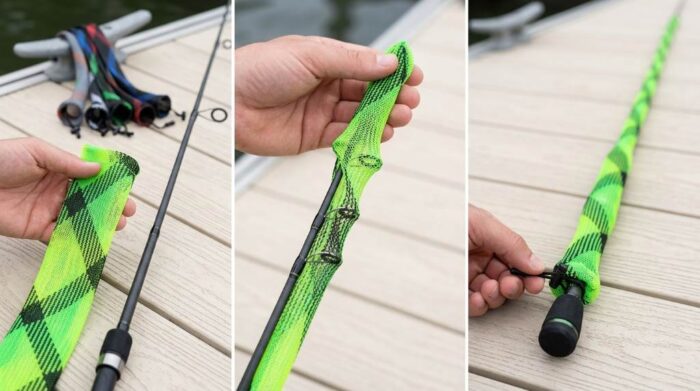
Next, hold the rod vertically with the butt resting firmly on the floor or boat deck. Push the upper end of the braided sleeve together like an accordion. Specifically, compressing the braided weave expands its internal diameter significantly, creating wide clearance for guide frames.
Then, gently slide the widened opening over the tip-top guide and upper running guides smoothly. Guide the sleeve downward in one continuous motion, keeping slight tension on the outer collar. Continue sliding until the folded bottom hem rests just above the reel locking seat.
Finally, pull the attached elastic retention strap downward around the reel mounting foot or crank handle. Hooking this elastic cord prevents the sock from riding upward during bumpy boat rides. Consequently, your rod stays completely enveloped and shielded from damaging vibrations.
SF Fishing Rod Sock Specifications and Sizing
Reviewing physical dimensions ensures you select the correct sleeve length for your specific tackle arsenal. Consult the comprehensive product specification matrix below to verify key sizing metrics.
| Model Variation | Standard Length | Expanded Diameter | Guide Compatibility | Lanyard System |
|---|---|---|---|---|
| Casting Rod Sock | 170 cm (67 In) | 3.2 cm (1.25 In) | Baitcast Micro Guides | Elastic Loop Cord |
| Spinning Rod Sock | 170 cm (67 In) | 6.4 cm (2.50 In) | Large Spinning Strippers | Adjustable Lanyard |
| Extra-Long Casting | 190 cm (75 In) | 3.5 cm (1.37 In) | Heavy Swimbait Guides | Elastic Loop Cord |
| Fly Rod Sleeve | 150 cm (59 In) | 3.0 cm (1.18 In) | Snake and Stripper Guides | Top Hanging Loop |
Preventing Locker Snags and Vehicle Transport Damage
Crowded boat rod lockers often resemble bird nests of tangled lines, hooks, and overlapping guides. Storing unprotected rods together leads to bent guide frames and scratched blank finishes during rough chop. In contrast, slipping SF socks over every rod creates an impenetrable barrier between neighboring tackle.
When stacked inside dark rod lockers, sleeved rods slide across each other like silk ribbons. Anglers can grab a bottom rod and pull it out without entangling surrounding combos. Consequently, you save valuable tournament minutes during rapid lure and presentation changes on the water.
Furthermore, rod socks provide essential protection during truck bed and SUV transport between fishing holes. Vibrations against carpeted truck caps or metal utility racks can rub flat spots onto graphite blanks. High-density braided PET mesh absorbs surface road friction, keeping high-modulus graphite fibers flawless.
Moreover, using color-coded rod socks helps you identify specific rod actions and line weights instantly. Assigning blue sleeves to crankbaits and black sleeves to worm rods streamlines on-the-water rod selection. Therefore, protective socks enhance boat deck efficiency as much as physical tackle security.
Care, Washing, and Storage Ring Deployment
Maintaining your SF rod socks ensures they slide smoothly and look vibrant across years of fishing. Dust, dried fish blood, and mud can settle into the woven mesh openings over time. Follow these basic maintenance habits to keep your sleeves in peak working condition.
First, rinse dirty sleeves in a sink filled with warm tap water and mild dish detergent. Agitate the mesh gently by hand to dislodge dried river clay and sand particles. Never place braided polymer sleeves inside a hot clothes dryer, as excessive heat shrinks synthetic filaments.
Next, hang cleaned sleeves in a well-ventilated garage or laundry room to air dry thoroughly. SF integrates a durable top hanging loop into the sealed tip crown of every sock. When rods are stored in garage racks, you can hang empty sleeves neatly on pegboard hooks.
Finally, organizing empty socks keeps your tackle room clean and prevents stray sleeves from getting stepped on. Stepping on braided mesh with cleated wading boots can crush or deform the polymer weave. Taking proper care of your sleeves ensures dependable protection for decades of angling.
Conclusion
Using the SF fishing rod sock provides superior blank protection and eliminates frustrating tackle tangles completely. By selecting proper diameters, following correct insertion steps, and securing reel lanyards, you safeguard gear. In addition, slick PET mesh allows rapid rod retrieval from crowded boat lockers and vehicle trunks.
Protect your valuable casting and spinning rods from expensive accidental guide damage on every trip. Invest in SF rod socks today and experience hassle-free tackle transport wherever you fish.
Frequently Asked Questions
Can I use a casting rod sock on a spinning rod?
No, spinning stripper guides are too wide to fit inside narrow casting sleeve profiles smoothly.
Does the braided PET mesh absorb water during rainstorms?
No, synthetic PET filaments repel water completely and dry rapidly in moving ambient air.
Will the rod sock fit over an attached fishing lure?
Pin the lure to the rod keeper first, as exposed hooks can puncture woven mesh filaments.
How do I stop the sleeve from sliding off during transport?
Stretch the integrated elastic loop around the reel handle or mounting foot securely.
Can I trim the length of the sleeve with scissors?
Cutting the sleeve unravels the woven mesh, so choose the proper pre-cut factory size instead.