Fishing is an art, and like any art form, it requires mastering your tools. For many anglers, the spinning reel is a go-to choice, known for its versatility and ease of use. Yet, one of its most crucial — and often misunderstood — components is the drag system, or what we commonly refer to as “tension.”
The drag system on your spinning reel is your unsung hero, the vital link between you, your rod, and that trophy fish. It’s the mechanism that allows line to be pulled off the spool under pressure, preventing break-offs when a fish makes a powerful run. Imagine hooking into a monster bass, and instead of a smooth, controlled fight, your line snaps instantly. That’s a direct result of improperly set drag.
This comprehensive guide will demystify spinning reel drag, teaching you not only how to adjust it, but why it’s so important, and how to optimize it for various fishing scenarios. Get ready to transform your angling experience from frustrating snaps to triumphant landings!
Why Drag Tension is Your Best Friend on the Water
Before we dive into the “how,” let’s solidify the “why.” Understanding the purpose of drag tension will make its adjustment intuitive and effective.
- Protecting Your Line: Your fishing line has a breaking strength, measured in pounds (e.g., 8lb test, 20lb test). Without a properly set drag, a strong fish can easily exceed this limit, causing your line to snap. The drag system acts as a shock absorber, allowing line to pay out gradually under strain, thus protecting your mainline, leader, and knots.
- Preventing Rod and Reel Damage: An improperly locked-down drag can put immense stress on your rod blanks, reel gears, and reel seat, potentially leading to costly damage. The drag system distributes this force, safeguarding your valuable equipment.
- Controlling the Fight: This is where drag truly shines. When a fish runs, you want to apply enough pressure to tire it out, but not so much that you risk a break-off. A correctly set drag allows you to maintain control, turning the fish’s powerful runs into a strategic advantage, gradually bringing it closer to the net.
- Maximizing Landing Ratios: Ultimately, proper drag adjustment directly translates to more fish in the boat or on the bank. It’s the difference between tales of “the one that got away” and successful catches.
Decoding Your Spinning Reel’s Drag System
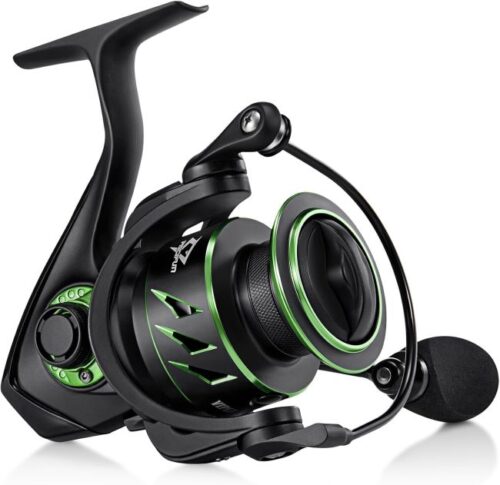
Most spinning reels employ a “front drag” system, meaning the drag adjustment knob is located on the front of the spool. This knob compresses a series of washers (drag washers) located inside the spool. The more you tighten the knob, the more pressure is applied to these washers, increasing the friction and thus the drag tension.
The Golden Rule of Drag: The 25-33% Rule
This is your starting point, the most widely accepted guideline for setting your drag:
Set your drag tension to approximately 25-33% of the breaking strength of your weakest link.
What does “weakest link” mean? It’s usually your fishing line, but it could also be your leader material if it has a lower breaking strength than your mainline.
Example: If you’re using 10lb test monofilament line, your ideal drag setting would be between 2.5 lbs and 3.3 lbs of pressure.
This rule provides a safe margin, allowing your line to stretch and absorb shock without snapping.
How to Adjust Drag Tension (The Step-by-Step Practical Guide)
Now for the hands-on part. Here’s a practical, repeatable method for setting your spinning reel drag:
Method 1: The Spring Scale Method (Most Accurate)
This is the preferred method for precision and is highly recommended for serious anglers or when targeting finicky species.
- Mount Your Reel: Attach your spinning reel to the rod you’ll be using for fishing. This ensures the entire system (rod flex included) is considered.
- Thread the Line: Thread your fishing line through all the guides on your rod.
- Tie a Loop: Tie a simple loop knot at the end of your mainline.
- Attach the Scale: Hook a small, handheld fishing scale (a digital one is ideal for accuracy) to the loop you just tied.
- Engage the Drag: Turn the drag adjustment knob on the front of your spool clockwise to tighten it initially. You want some tension.
- Pull the Scale: While holding the rod at a natural fishing angle (not straight up), pull the scale straight away from the rod tip, simulating a fish taking line.
- Watch the Number: Observe the reading on the scale as line starts to peel off your spool.
- Adjust and Repeat:
- If the reading is too high (line doesn’t budge until too much pressure): Loosen the drag by turning the knob counter-clockwise in small increments.
- If the reading is too low (line comes off too easily): Tighten the drag by turning the knob clockwise in small increments.
- Repeat the pull-and-adjust process until the scale consistently reads your desired drag setting (25-33% of your weakest link).
- Test with a Snub: Once you’ve reached your target, give the line a couple of quick, firm tugs to simulate a fish’s head shake. The drag should give smoothly without any sticking or jerking.
Method 2: The “Feel” Method (Practical On-the-Water Adjustment)
While less precise, this method is valuable for quick adjustments while you’re fishing or if you don’t have a scale. It relies on developing a sense of feel.
- Hold the Rod: Hold your rod with the reel attached, as if you were fishing.
- Pull the Line: Grab your fishing line just above the reel (not at the rod tip, as that introduces rod flex which you want to account for in the “pull”).
- Pull Gently: Pull the line straight away from the reel.
- Listen and Feel:
- Too Tight: If you pull and the line doesn’t budge, or the rod tip bends excessively before line comes off, your drag is too tight. Loosen it.
- Too Loose: If the line comes off with very little resistance, almost like a free spool, your drag is too loose. Tighten it.
- Just Right: You want the drag to release smoothly under a moderate amount of pressure. It should feel like it requires effort to pull line, but not so much that you feel like you’re about to snap something. Imagine a fish making a strong, sustained run.
- Practice: The “feel” method improves significantly with practice. Spend some time feeling different drag settings at home so you can replicate them on the water.
Related: A Comprehensive Guide to Fishing Rod Handle Replacement
Fine-Tuning Your Drag for Specific Scenarios

The 25-33% rule is a fantastic baseline, but experienced anglers often make subtle adjustments based on conditions and target species:
- Light Line/Light Tackle: If you’re fishing with very light line (e.g., 4-6lb test) for panfish or trout, err on the lower side of the 25-33% rule (closer to 25%). This provides maximum protection for your delicate line.
- Heavy Cover/Structure: When fishing around heavy cover (e.g., lily pads, submerged timber, docks) where you need to quickly pull a fish out of danger, you might set your drag slightly higher, closer to the 33% mark. However, be extremely cautious not to over-tighten, as you risk snapping your line or pulling hooks.
- Strong, Fast-Running Fish: For species known for blistering runs (e.g., tuna, salmon, some saltwater species), a slightly higher drag setting might be appropriate, allowing you to turn their heads and slow them down more effectively. However, this is where a high-quality reel with a smooth drag system is paramount.
- Fighting Fatigue: As a fight progresses, and especially with larger fish, you might find yourself gradually tightening the drag very slightly as the fish tires, allowing you to gain more line. Do this incrementally and with caution.
- Live Bait Fishing: When using live bait, you often want a slightly looser drag initially to allow the bait to swim freely and for the fish to pick up the bait without feeling too much resistance. Once the fish is firmly hooked, you can then adjust to your fighting drag.
- Cold Weather: Drag washers can sometimes stiffen in extreme cold, making the drag feel tighter than it actually is. Be mindful of this and potentially loosen your drag slightly in frigid conditions.
Related: What Makes Fluorocarbon Line Better for Ice Fishing
Essential Drag Maintenance for Optimal Performance
A smooth, consistent drag is a happy drag. Here’s how to keep your drag system in top shape:
- Rinse After Saltwater Use: Always thoroughly rinse your reel with fresh water after fishing in saltwater to prevent corrosion.
- Loosen Drag When Storing: Never store your spinning reel with the drag tightened. This compresses the drag washers over time, leading to “flat spots” and jerky drag performance. Loosen the drag completely when putting your reel away.
- Occasional Cleaning and Greasing: Periodically, especially if your drag starts to feel sticky or uneven, disassemble the drag stack (refer to your reel’s manual or online tutorials) and clean the drag washers. Re-grease them with specialized drag grease (not regular grease) to ensure smooth operation.
- Replace Worn Washers: Over time, drag washers can wear out. If your drag feels consistently erratic despite cleaning and greasing, it might be time to replace the washers.
Common Drag Mistakes to Avoid
- “Gorilla Drag”: The biggest mistake is setting the drag too tight, believing it will land the fish faster. This almost guarantees a snapped line or pulled hook.
- Finger on the Spool: During a fight, resist the urge to apply extra pressure by pressing your thumb or fingers directly onto the spool. This creates uneven, jerky resistance and can damage your line or cause a backlash. Let the drag do its job.
- Not Testing Regularly: Drag settings can change throughout the day due to temperature fluctuations, line stretch, or accidental bumps. Get into the habit of checking your drag periodically.
- Using the Wrong Grease: Never use petroleum-based grease on your drag washers unless specifically recommended by the manufacturer. This can degrade the washers and ruin drag performance.
Related: How to Fix Tangled Fishing Line Mid-Cast: Expert Solutions for Anglers
Conclusion: The Art of the Controlled Fight
Mastering the art of drag adjustment on your spinning reel is a game-changer. It transforms fishing from a test of brute strength into a graceful dance, allowing you to exert controlled pressure, tire out even the most powerful fish, and ultimately, land more catches.
By understanding the “why” behind drag, meticulously setting it with the 25-33% rule, fine-tuning it for specific situations, and maintaining your reel, you’ll gain an invaluable edge on the water. So, the next time you cast your line, remember that your spinning reel’s drag is not just a knob – it’s your key to unlocking a world of successful and exhilarating fishing experiences. Tight lines!