
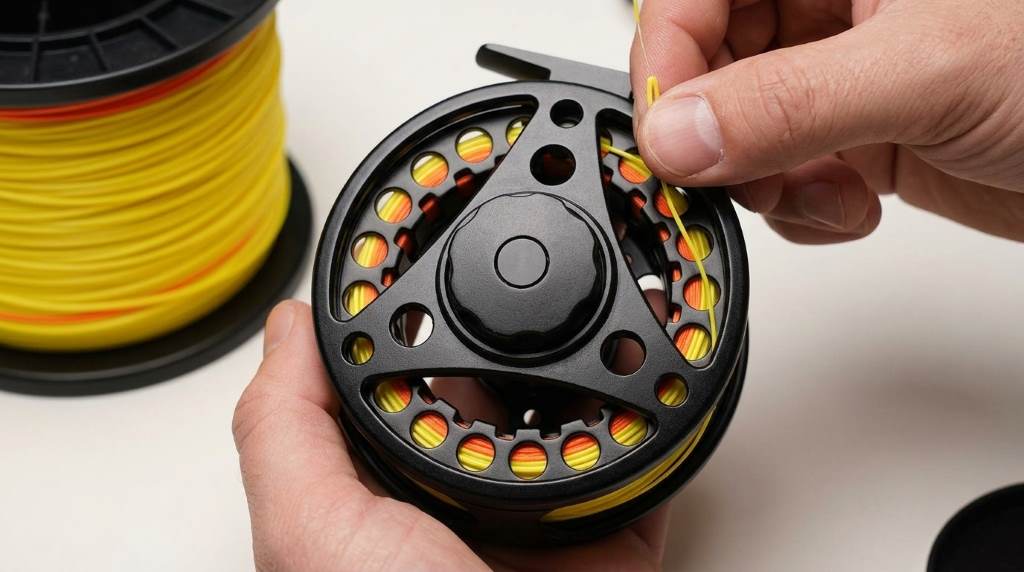
You use the reel by spooling backing line, attaching fly line, and tying on leader. Next, adjust the knurled drag knob to balance line resistance against target fish runs. Finally, mount the reel securely to your fly rod seat and balance your casting stroke.
Angling studies show that large arbor fly reels retrieve line 34 percent faster than standard spools. Furthermore, research demonstrates that reduced line coiling increases fly casting accuracy by nearly 22 percent. Master the SF SF-001 Large Arbor Fly Fishing Reel to enjoy smooth drag on a budget. This dependable fly reel excels during trout, panfish, and freshwater bass excursions.
This comprehensive tutorial covers spool rigging, left-to-right hand conversion, drag calibration, and field maintenance. In addition, you will discover essential river fighting tactics and rim-palming techniques. Therefore, follow our practical guidelines to master fly line management on every river trip.
Key Takeaways
- Attach braided Dacron backing using an arbor knot to build an even foundation.
- Reverse the internal one-way roller bearing to switch between left and right hand retrieve.
- Set drag tension just tight enough to prevent spool overrunning during sudden line pulls.
- Palm the exposed outer spool rim to apply manual braking during heavy fish surges.
- Rinse the aluminum reel with fresh water and air dry after every outing.
- Store the reel with the drag completely loosened to preserve internal disc washers.
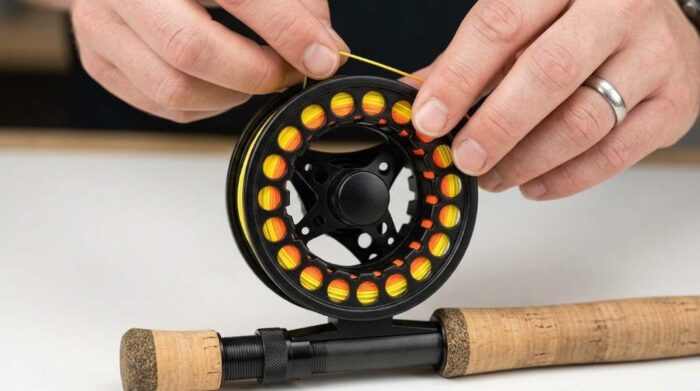
Anatomy and Engineering of the Large Arbor Spool
The large arbor architecture increases the central hub diameter significantly compared to vintage standard spools. Specifically, this expanded circumference retrieves several inches of line per single handle rotation. Furthermore, wider spool diameters reduce line memory, allowing coils to shoot through rod guides effortlessly.
Manufacturers craft the reel frame and spool using lightweight aluminum alloy with precision porting holes. Consequently, skeletonized cutouts reduce total weight without compromising structural strength against torsional twisting. In addition, protective surface coatings shield the metal from freshwater corrosion and fine silt abrasions.
A smooth one-way clutch bearing supports the stainless steel main drive spindle. Therefore, the spool spins freely during rapid forward retrieves without engaging mechanical resistance. Conversely, line peeling backward immediately engages the Teflon disc drag stack smoothly.
Converting Retrieve Direction Between Left and Right Hand
Most anglers prefer winding with their non-dominant hand while controlling the rod with their dominant arm. Fortunately, this reel allows quick retrieve direction swaps without special workshop tools. Therefore, follow these simple mechanical adjustments to customize your winding orientation.
First, press the center spool release latch and pull the spool off the main frame. Next, place both components onto a clean, flat towel to prevent small parts from rolling away. Inspect the central hub interior to locate the white or silver roller clutch bearing.
Next, use tweezers or fingertips to slide the spring retaining clip off the spindle shaft. Carefully remove the one-way clutch bearing from its internal hexagonal seat housing. In fact, reversing the bearing orientation flips the directional clutch mechanism instantly.
Turn the one-way bearing over and press it firmly back into the hexagonal socket. Subsequently, reinstall the wire retaining clip to secure the bearing in place. Finally, remount the spool onto the frame and spin the handle to confirm proper direction.
Spooling Backing, Fly Line, and Tapered Leaders
Rigging your reel properly ensures sufficient line capacity and prevents catastrophic line breaks during hard runs. Therefore, take time to tie clean, low-profile knots that pass through line guides smoothly. Follow this three-step spooling sequence for dependable river rigging.
Step 1: Installing Braided Dacron Backing
Secure the tag end of twenty-pound braided Dacron backing around the spool arbor using an arbor knot. Pull the standing line firmly to cinch the dual slip knots flush against the metal spindle. In addition, trim the tag end close to the knot to prevent line catching.
Wind fifty to one hundred yards of backing line onto the spool under moderate hand tension. Furthermore, laying coils evenly across the spool width prevents upper wraps from digging into lower layers. Backing provides crucial insurance when trophy fish take unexpected fifty-yard river runs.
Step 2: Connecting Weight-Forward Fly Line
Join the backing line to the rear running end of your weight-forward fly line. Most modern fly lines feature pre-welded loops for effortless loop-to-loop connections. Alternatively, if loops are absent, connect the lines using a compact Albright knot or nail knot.
Wind the entire ninety-foot fly line onto the spool with steady winding pressure. Meanwhile, leave approximately one-quarter inch of clearance beneath the outer frame rim. Leaving adequate clearance ensures that loosely reeled line will not jam against frame pillars.
Step 3: Attaching the Tapered Monofilament Leader
Connect a nine-foot tapered nylon or fluorocarbon leader to the front welded fly line loop. Use an interlocking perfection loop connection to ensure a strong, seamless energy transfer during casting. Consequently, the streamlined loop slides through snake guides without snagging during close-quarters netting.
Inspect the leader butt section to verify that diameter matches your fly line tip thickness. Specifically, balanced diameter matching ensures smooth loop unfurling when presenting delicate dry flies to rising trout. Next, tie your chosen tippet material and favorite wet fly to the terminal leader end.
Calibrating Drag Tension and Rim Palming Techniques
The rear-mounted knurled drag knob controls compression on internal Teflon and stainless steel drag discs. Turning the knob clockwise increases rotational resistance, whereas counterclockwise turning lightens pressure. Therefore, understanding correct drag settings protects fragile tippets from snapping during violent strikes.
Set baseline drag pressure relatively light, testing resistance by pulling line by hand from the spool. Specifically, the spool should spin smoothly without overrunning or developing birdnest tangles. Furthermore, light baseline resistance protects fine 5X and 6X trout tippets from sudden shock breaks.
When fighting aggressive river bass or hard-running trout, apply manual braking by palming the exposed spool rim. Gently cup your palm against the outer rim flange to increase drag resistance dynamically. In addition, releasing hand pressure instantly restores your safe light baseline setting.
Line Capacities and Setup Specifications
Matching reel sizes to fly line weights guarantees ideal rod balance and casting efficiency. Review the specification table below to select appropriate line weights and backing capacities.
| Reel Size Model | Target Line Weight | Backing Capacity | Optimal Target Species |
|---|---|---|---|
| Size 3/4 Arbor | 3-Weight to 4-Weight | 50 Yards 20lb Dacron | Small Stream Trout and Panfish |
| Size 5/6 Arbor | 5-Weight to 6-Weight | 80 Yards 20lb Dacron | River Trout and Smallmouth Bass |
| Size 7/8 Arbor | 7-Weight to 8-Weight | 120 Yards 20lb Dacron | Largemouth Bass and Steelhead |
| Size 9/10 Arbor | 9-Weight to 10-Weight | 150 Yards 30lb Dacron | Pike, Salmon, and Light Saltwater |
Field Maintenance and Storage Best Practices
Consistent care preserves smooth drag responsiveness and keeps internal bearings rotating freely for many seasons. Even freshwater reels accumulate grit, algae slime, and fine minerals during active fishing trips. Therefore, follow these quick maintenance routines after returning from the river.
First, detach the spool from the frame and submerge both parts in lukewarm tap water. Swirl components gently to dissolve river silt and dislodge sand grains from porting channels. In particular, never use harsh chemical degreasers or pressurized hot water jets on reel bearings.
Wipe all exterior metal surfaces dry using a soft microfiber towel. Next, apply one drop of synthetic reel oil to the main spindle shaft and handle knob joint. However, keep lubricants away from internal Teflon drag discs to prevent slippage.
Before storing your reel inside a neoprene pouch, back off the drag knob completely. Loosening drag tension relieves continuous spring compression on the delicate internal friction washers. As a result, drag discs maintain factory friction characteristics year after year.
Troubleshooting Common River Challenges
River anglers occasionally encounter mechanical hiccups or line tangles while wading brisk currents. Fortunately, systematic troubleshooting solves most field problems quickly without ending your fishing day. Therefore, master these solutions to keep your reel operating smoothly on the water.
Clearing Line Jams Behind the Spool Rim
Thin running lines can occasionally slip between the spool edge and outer cage frame. This issue typically happens when reeling rapidly without maintaining tension on incoming line. Consequently, if a jam occurs, stop turning the reel handle immediately to prevent line gouging.
Depress the spool release latch and gently ease the spool forward off the spindle. Next, carefully untangle the trapped line loop from the internal frame cavity with fingers. Finally, re-seat the spool securely and resume reeling while pinching line against the rod grip.
Resolving Stiff or Sticky Drag Rotation
A sudden sticky drag feel usually indicates sand particles lodged inside the drag housing. Disassemble the spool from the main body and inspect the drive gear area for grit. Subsequently, rinse the exposed mechanism thoroughly under clean tap water while rotating the spindle.
If stickiness persists, check whether someone applied petroleum grease to the dry Teflon washers. Greasy friction discs slip erratically and grab under heavy rotational pressure. Instead, wipe drag surfaces clean with isopropyl alcohol to restore consistent, silky-smooth braking performance.
Conclusion
The large arbor design provides fast retrieval, minimal line memory, and reliable drag protection for anglers. By mastering spool rigging, retrieve direction changes, and rim palming, you handle river gamefish confidently. Furthermore, simple rinsing and drag-loosening routines ensure years of dependable riverside performance.
Rig up your fly gear and experience the thrill of matching wits with rising trout. In addition, master your reel management techniques and enjoy seamless fly fishing adventures today.
Frequently Asked Questions
How do I switch the reel from left-hand to right-hand retrieve?
Remove the spool and flip the one-way clutch bearing inside the central hub housing.
What type of line backing should I use with this fly reel?
You should use twenty-pound braided Dacron backing for standard trout and freshwater setups.
Can I use this fly reel for saltwater fishing?
This reel is designed for freshwater, so thorough freshwater rinsing is required after saltwater exposure.
Why should I loosen the drag knob during storage?
Loosening the drag relieves pressure on internal friction discs, preserving smooth braking performance over time.
How much backing fits on the size 5/6 reel?
The 5/6 size accommodates approximately eighty yards of twenty-pound braided Dacron line.


