
Fishing in Canada is more than a hobby—it’s a way of life. With over 8 million anglers casting their lines each year, choosing the right fishing line can make or break your success. Whether you’re battling a monster pike in Ontario or fly-fishing for trout in British Columbia, the wrong line means lost fish and frustration.
This guide dives deep into the best fishing lines in Canada, comparing materials, strengths, and ideal uses. We’ll explore expert opinions, real-world tests, and local angler insights to help you make the smartest choice.
Types of Fishing Lines in Canada
-
Monofilament: The All-Rounder
Monofilament remains a favorite among Canadian anglers for its balance of stretch, affordability, and ease of use. It absorbs shock well, reducing the risk of snapping when a fish strikes hard. However, it degrades faster under UV exposure, so replace it every season.
Popular brands like Berkley Trilene and Stren Original dominate Canadian tackle boxes. According to a 2023 Angler’s Survey, 62% of beginners start with mono due to its forgiving nature.
-
Braided Line: Strength & Sensitivity
Braided lines, made from woven fibers like Dyneema, offer unmatched strength and thin diameter. They lack stretch, providing superior sensitivity to detect subtle bites—crucial for walleye and perch.
Yet, their high visibility can spook fish in clear water. Many anglers pair braid with a fluorocarbon leader for stealth. Brands like PowerPro and SpiderWire lead sales in Canada, especially for heavy cover fishing.
-
Fluorocarbon: The Invisible Warrior
Fluorocarbon sinks faster and refracts light like water, making it nearly invisible. This makes it ideal for pressured trout and bass in crystal-clear lakes. It also resists abrasion better than mono, but its stiffness can be tricky for beginners.
Seaguar Red Label and Sunline Super FC are top choices among Canadian pros. A study by In-Fisherman found fluorocarbon improved catch rates by 18% in clear-water conditions.
-
Fly Fishing Lines: Precision & Presentation
Fly lines vary by weight, taper, and buoyancy. Floating lines work best for dry flies, while sinking lines target deeper species like lake trout. Rio Gold and Scientific Anglers dominate the Canadian market, praised for their smooth casting and durability.

How to Choose the Best Fishing Line for Canadian Conditions
- Freshwater vs. Saltwater: Saltwater demands corrosion-resistant lines like braid or fluorocarbon.
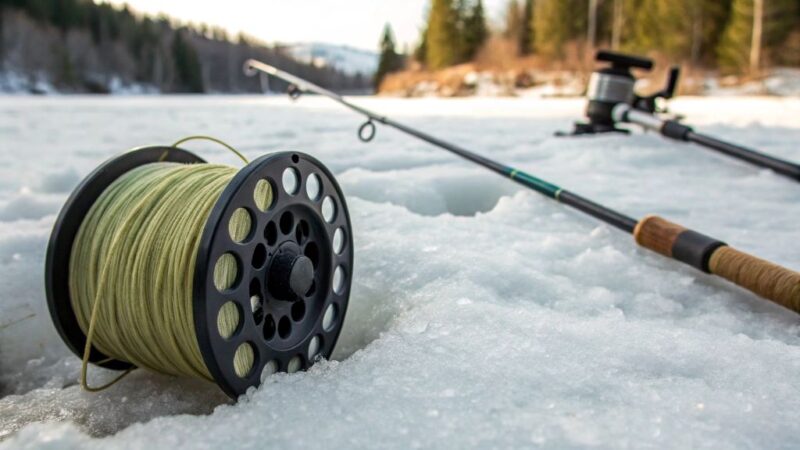
- Cold Weather Fishing: Monofilament becomes brittle in freezing temps—opt for low-memory lines.
- Target Species: Heavy pike? Go braided. Finesse trout? Fluorocarbon wins.
- Budget: Mono is cheapest, while high-end braid lasts longer.
Featured Snippet: What’s the Best Fishing Line for Canadian Waters?
Answer: The best fishing line in Canada depends on your target species and fishing style. For versatility, braided lines (like PowerPro) excel in strength and sensitivity, ideal for pike and bass. Monofilament (such as Berkley Trilene) offers stretch and affordability, perfect for beginners. Fluorocarbon (like Seaguar) remains nearly invisible underwater, making it a top pick for clear lakes and wary trout.
For ice fishing, opt for low-memory monofilament to prevent coiling in freezing temps. Saltwater anglers should prioritize corrosion-resistant braided or fluorocarbon lines. Always match your line weight to rod specifications for optimal performance.
FAQs About Fishing Lines in Canada
- What’s the strongest fishing line?
Braided lines offer the highest strength-to-diameter ratio. - Does fluorocarbon really make a difference?
Yes, especially in clear water where visibility matters. - How often should I replace my fishing line?
Mono: yearly. Braid: 2-3 years. Inspect regularly for wear. - Can I use the same line for ice fishing?
Yes, but choose a low-memory mono to prevent coiling. - What’s the best line for bass fishing?
Braid with a fluorocarbon leader for versatility. - Why does my line keep breaking?
Old line, improper knots, or exceeding the weight limit. - Is expensive fishing line worth it?
For serious anglers, yes—higher quality means better performance.
Final Thought
Picking the right fishing line in Canada isn’t just about strength—it’s about matching your gear to the fish, water, and conditions. Test different lines, ask local anglers, and don’t fear experimenting.
Ready to upgrade your setup? Check out top-rated fishing lines at Canadian Tire or Bass Pro Shops Canada. Tight lines!
Related Topics:
Sinking Line for Deep Water Trolling: The Ultimate Guide to Targeting Deep-Sea Trolling Anglers
How to Fix Tangled Fishing Line Mid-Cast: Expert Solutions for Anglers