Key Takeaways
- Foxelli wading boots weigh just 1.3 pounds per boot, which reduces joint fatigue during long hikes and river crossings.
- Slip-resistant rubber outsoles channel water and debris for steady footing on mud, moss, and slick rocks.
- Reinforced stitching and a rubber toe and heel rand protect against rocks, brush, and gravel.
- Mesh drain ports quickly release water while blocking debris to keep your feet light in the water.
- Removable OrthoLite insoles and shock-absorbing EVA midsoles deliver all-day comfort on uneven terrain.
Wading boots take more abuse than almost any gear you own. You hike miles over rugged trails to reach the river. You step on slick rocks, push through brush, and stand in cold currents for hours. Heavy boots drain your energy before the first cast. Weak soles slip on mossy boulders and risk a dangerous fall. Thin uppers shred on rocks and gravel within a season.
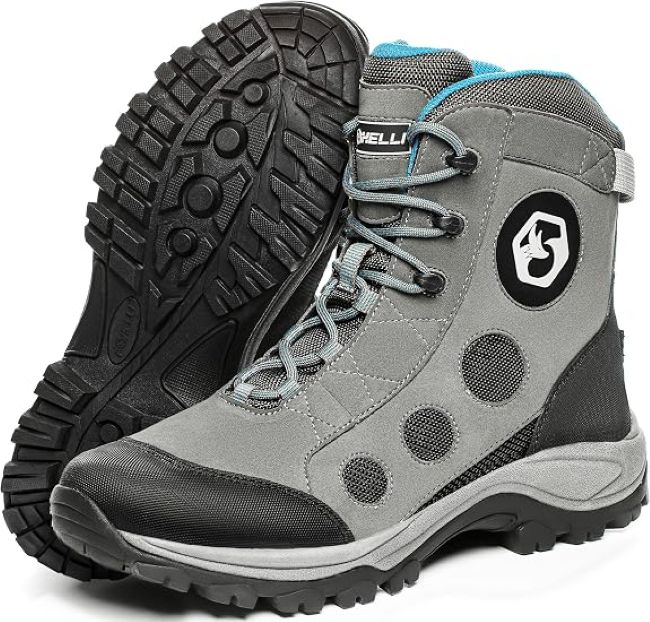
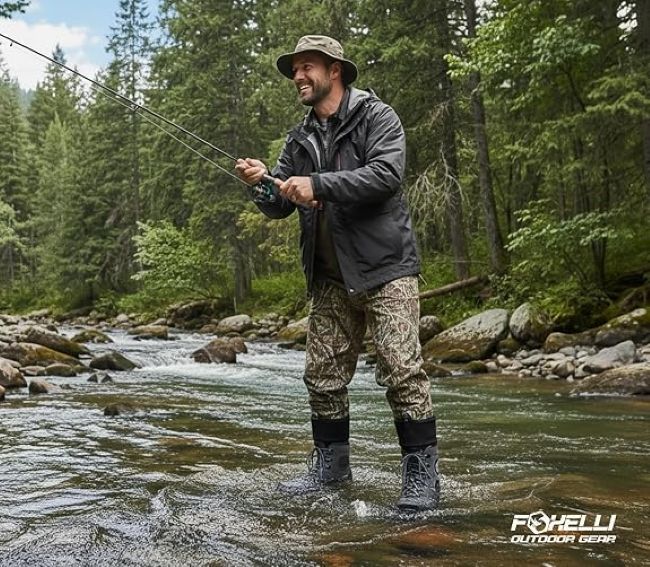
Stockingfoot waders need a dedicated boot to provide traction, ankle support, and durability. The Foxelli wading boots target this need with a lightweight microfiber build, slip-resistant rubber outsoles, and reinforced construction built for rivers and trails. For anglers who cover ground to reach their water, that balance deserves attention.
Product at a Glance
Foxelli Wading Boots
| Feature | Details |
|---|---|
| Product Name | Foxelli Wading Boots |
| Weight | 1.3 lb per boot |
| Sole Material | Ethylene Vinyl Acetate, Rubber |
| Outer Material | Rubber, microfiber |
| Inner Material | Nylon |
| Shaft Circumference | 10 inches |
| Insole | Removable OrthoLite |
| Midsole | Shock-absorbing EVA |
| Drainage | Mesh drain ports |
| Fit Advice | Order one full size up for stockingfoot waders |
| Special Features | Rear pull loop, lace hooks, rubber kick-log |
Detailed Review
Why This Product Stands Out
Most wading boots force a choice between durability and weight. Heavy rubber boots withstand rocks but exhaust your legs before you reach the river. Lightweight boots save energy but tear apart on brush and gravel. The Foxelli boots split the difference by combining an abrasion-resistant microfiber upper with a lightweight design that weighs just 1.3 pounds per boot. That weight reduction matters because fatigue accumulates over a long day on the water, and lighter boots let you hike further and wade longer without the exhaustion that heavy rubber causes.
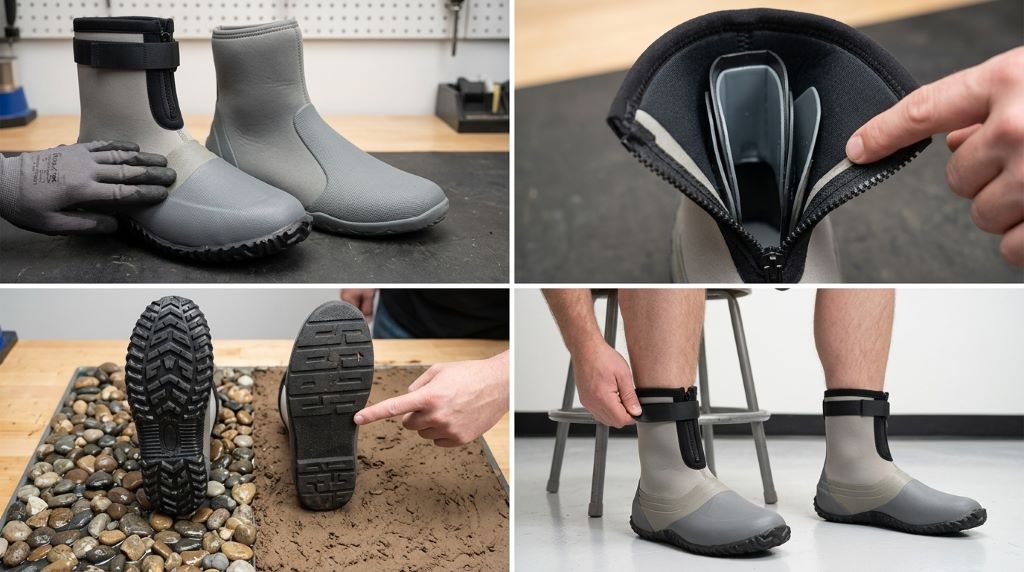
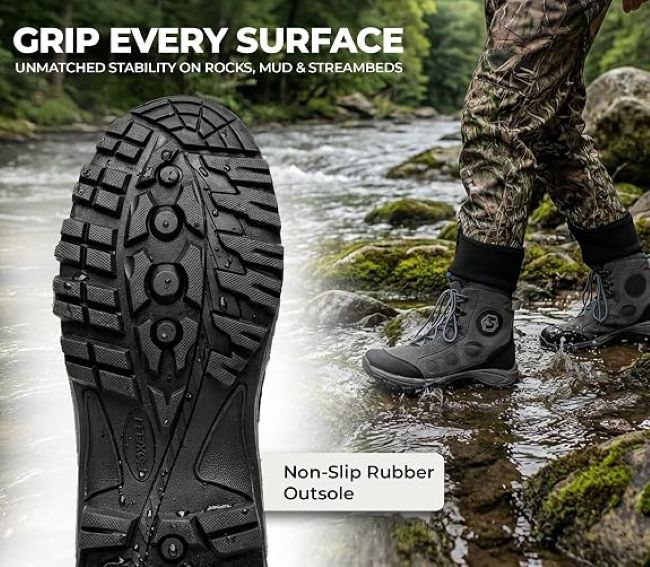
The slip-resistant rubber outsole sets these boots apart from standard hiking designs. A tread pattern engineered for wading channels water and debris away from the sole to maintain contact with the surface. That channeling matters because mud, moss, and slick rocks create the traction failures that cause falls. A steady footing keeps you confident and focused on fishing instead of worrying about your next step.
Key Specifications
| Specification | Value |
|---|---|
| Weight | 1.3 lb per boot |
| Sole Material | EVA, Rubber |
| Outer Material | Rubber, microfiber |
| Inner Material | Nylon |
| Shaft Circumference | 10 inches |
| Insole | Removable OrthoLite |
| Midsole | Shock-absorbing EVA |
| Toe and Heel | Rubber rand protection |
| Drainage | Mesh drain ports |
| Fit | Extra toe room for sock layering |
| Sizing Advice | One full size up for stockingfoot waders |
| Closure | Laces with hooks |
| Pull Loop | Rear |
| Kick Feature | Rubber kick-log |
Design & Build Quality
Foxelli built these wading boots for the abuse that river fishing demands. The rubber toe and heel rand protect the high-impact zones that strike rocks and logs during wading. Unprotected boots wear through at the toe within a season of regular river use. The rand absorbs that impact and extends the usable lifespan significantly.
The extra toe room in the fit design serves a specific purpose. Stockingfoot waders require thick neoprene booties and often heavy sock layers underneath. A standard fit compresses the toes, which restricts circulation and causes numbness in cold water. The extra room allows your toes to move freely and prevents pressure when wading or hiking on uneven terrain. That fit matters because numb feet reduce your balance and end your day early.
Materials & Construction
The upper uses a soft, durable microfiber and breathable plaid nylon. Microfiber provides the abrasion resistance that thin nylon alone lacks, while the plaid nylon allows the boot to breathe during warm hikes. Reinforced stitching runs along the seams and stress points where heavy wading concentrates force. Cheaper boots fail at these seams when loaded with water and gravel. Foxelli reinforces these areas to prevent the ripping that dumps gear and ruins a trip.
The shock-absorbing EVA midsole reduces joint fatigue during long hikes and river crossings. EVA is a dense foam that absorbs the impact of stepping on rocks and hard surfaces. A stiff sole transfers that impact directly to your knees and ankles, which causes soreness that ends a trip early. The flexible upper allows unrestricted movement on hikes or in the water, which keeps your stride natural over varied terrain.
Performance
Performance for a wading boot comes down to traction, drainage, and comfort over long hours. The Foxelli boots deliver on all three. The slip-resistant rubber outsoles grip mud, moss, and slick rocks through a tread pattern that channels water and debris away from the contact surface. That channeling keeps the sole engaged with the ground instead of hydroplaning on a film of water.
Mesh drain ports quickly release water while helping block debris. A wading boot that traps water adds weight with every step and creates a suction effect that makes wading exhausting. The drain ports let water escape immediately, which keeps your feet lighter and more comfortable in wet environments. Blocking debris prevents sand and gravel from entering the boot and causing abrasions during long hikes.
Comfort / Usability
Comfort determines whether you actually wear your boots or leave them at home. The Foxelli boots score well here. The removable OrthoLite insoles provide cushioning that resists compression over time. Cheap foam insoles flatten out after a few trips, which leaves your feet aching on rocky riverbeds. OrthoLite retains its cushioning through repeated wet and dry cycles, which keeps the comfort consistent across seasons.
The utility details add genuine usability value. A rear pull loop and lace hooks help you slide in and secure the fit quickly. A rubber kick-log allows hands-free removal after a long day, which matters when your hands are cold, wet, or handling fish. Supportive at the ankle yet flexible in motion, the boots pair easily with chest waders without restricting your stride.
Features Explained
Lightweight 1.3-Pound Design
Reduced Joint Fatigue
The 1.3-pound weight per boot reduces the energy required for every step. That reduction matters because wading against current and hiking over trails with heavy boots drains your legs before the fishing day ends. Lighter boots let you cover more water and stay out longer without the exhaustion that heavy rubber causes.
Slip-Resistant Rubber Outsoles
Steady Traction on Wet Surfaces
The rubber outsoles feature a tread pattern that channels water and debris away from the contact surface. That channeling matters because mud, moss, and slick rocks create the traction failures that cause falls. A steady footing keeps you confident and focused on fishing instead of worrying about your next step.
Rubber Toe and Heel Rand
High-Impact Zone Protection
The rubber rand protects the toe and heel areas that strike rocks and logs during wading. Unprotected boots wear through at the toe within a season of regular river use. The rand absorbs that impact and extends the usable lifespan significantly by preventing the abrasion that destroys standard uppers.
Reinforced Stitching and Abrasion-Resistant Upper
Season-After-Season Durability
Reinforced stitching runs along the seams and stress points where heavy wading concentrates force. The abrasion-resistant microfiber upper holds up against brush and gravel that shred thinner materials. That durability matters because wading boots face constant contact with rough surfaces that destroy budget alternatives.
Removable OrthoLite Insoles and EVA Midsoles
All-Day Comfort on Uneven Terrain
The removable OrthoLite insoles provide cushioning that resists compression over time. The shock-absorbing EVA midsoles reduce joint fatigue by absorbing the impact of stepping on rocks and hard surfaces. That comfort matters because standing on a rocky riverbed for hours causes soreness that ends a trip early.
Extra Toe Room Fit
Sock Layering and Circulation
The fit design includes extra toe room for movement and sock layering. That room matters because stockingfoot waders require thick neoprene booties and heavy socks underneath. A standard fit compresses the toes, restricts circulation, and causes numbness in cold water. The extra room keeps your feet warm and balanced.
Mesh Drain Ports
Quick Water Release and Debris Blocking
Mesh drain ports quickly release water while helping block debris. That drainage matters because a wading boot that traps water adds weight with every step and creates a suction effect that makes wading exhausting. The ports let water escape immediately while keeping sand and gravel out.
Rear Pull Loop, Lace Hooks, and Rubber Kick-Log
Easy Gear Up and Down
The rear pull loop and lace hooks help you slide in and secure the fit quickly. The rubber kick-log allows hands-free removal after a long day. That ease matters because a difficult boot to put on or take off adds frustration to every trip, especially when your hands are cold, wet, or handling fish.
Real World Usage
Consider a fly angler hiking two miles of rugged trail to reach a remote trout stream. They wear the Foxelli boots over stockingfoot waders, sized one full size up to accommodate the neoprene bootie and thick socks. The 1.3-pound weight keeps their legs fresh for the hike. The slip-resistant outsoles grip the muddy trail. Once in the river, the mesh drain ports release water immediately with each step. The rubber rand protects the toe as they navigate boulders. The OrthoLite insoles cushion their feet through hours of wading on rocky substrate.
Now picture a bass angler wading a slick tailwater below a dam. The rubber outsoles channel water away and grip the mossy rocks. The EVA midsoles absorb the impact of stepping on uneven cobble. The reinforced stitching holds up to the constant abrasion of moving water and sand. After a long day, the rubber kick-log lets them remove the boots hands-free without bending over with a tired back.
Benefits
- 1.3-pound lightweight design reduces joint fatigue on long hikes.
- Slip-resistant rubber outsoles grip mud, moss, and slick rocks.
- Rubber toe and heel rand protect high-impact zones from rocks.
- Reinforced stitching prevents seam failure under heavy wading loads.
- Removable OrthoLite insoles provide long-lasting cushioning.
- Shock-absorbing EVA midsoles reduce impact on rocky riverbeds.
- Extra toe room accommodates sock layers and prevents numbness.
- Mesh drain ports release water quickly and block debris.
- Rear pull loop and lace hooks make gearing up fast.
- Rubber kick-log allows hands-free removal after a long day.
Limitations
- Rubber outsoles lack the maximum grip of felt soles on slick, algae-covered rock.
- No built-in insulation; requires thick socks for cold-weather wading.
- Designed without full waterproofing; relies on wader booties for moisture protection.
- Sizing up one full size for stockingfoot waders may feel loose for standard footwear use.
- 10-inch shaft circumference may feel tight for users with very thick calves.
- Microfiber upper may require more drying time than fully synthetic alternatives.
Who Should Buy It?
The Foxelli wading boots suit fly anglers, backpacking fishermen, and anyone who hikes to reach their water. Anyone who values lightweight gear that reduces fatigue will appreciate the 1.3-pound design. Anglers who wade rivers with mud, gravel, and uneven terrain will benefit from the slip-resistant outsoles and reinforced construction. If you wear stockingfoot waders and need a boot that accommodates thick sock layers, the extra toe room delivers that fit.
Who Should Avoid It?
Skip these boots if you need felt soles for maximum grip on slick, algae-covered rock bottoms. Rubber outsoles grip well but lack the security of felt on certain surfaces. Anyone who needs insulated boots for extreme cold-weather wading should look for models with built-in insulation. Users who want a fully waterproof boot for wet wading without waders should consider a different design, as these boots rely on wader booties for moisture protection.
Key Features Table
| Feature | Benefit |
|---|---|
| 1.3-pound lightweight design | Reduces joint fatigue on long hikes |
| Slip-resistant rubber outsoles | Steady traction on mud, moss, and rocks |
| Rubber toe and heel rand | Protects high-impact zones from abrasion |
| Reinforced stitching | Prevents seam failure under heavy loads |
| OrthoLite insoles and EVA midsoles | All-day comfort on uneven terrain |
| Extra toe room fit | Accommodates sock layers and prevents numbness |
| Mesh drain ports | Quick water release and debris blocking |
| Pull loop, lace hooks, kick-log | Easy gear up and hands-free removal |
Pros & Cons
| Pros | Cons |
|---|---|
| 1.3-pound lightweight design | Rubber lacks felt’s grip on slick rock |
| Slip-resistant wet traction | No built-in insulation for cold weather |
| Durable reinforced construction | Not fully waterproof without waders |
| OrthoLite insole comfort | Sizing up may feel loose for standard use |
| Quick-draining mesh ports | 10-inch shaft may fit tight on large calves |
| Hands-free kick-log removal | Microfiber may require longer drying time |
| Extra toe room for sock layers |
Cleaning Tips
Rinse the boots thoroughly with fresh water after each use, especially after saltwater or muddy trips. Sand, mud, and algae residue degrade the stitching and outsole over time. Scrub the mesh drain ports with a brush to remove embedded debris that blocks water flow. Clean the rubber outsole treads to maintain the channeling that provides wet traction. Do not use harsh detergents that can damage the microfiber upper.
Maintenance Tips
Remove the OrthoLite insoles after each use and let them dry separately. Trapped moisture between the insole and boot bed promotes odor and material degradation. Inspect the reinforced stitching and rubber rand for signs of wear before each season. Store the boots in a cool, dry location away from direct sunlight to preserve the rubber and microfiber. Avoid storing wet boots in sealed containers, which promotes mold and mildew growth inside the boot.
Troubleshooting Tips
When the boots feel tight, check that you ordered one full size larger than your regular shoe size. This extra room helps accommodate stockingfoot waders and sock layers. Should the outsole lose traction on wet surfaces, clean the tread channels to remove embedded mud and sand. When water drains slowly, use a brush to clear debris from the mesh drain ports. If the insoles feel compressed or develop an odor, remove them and replace them with fresh OrthoLite insoles. For laces worn down by friction against the hooks, replace them with wader-specific laces designed for demanding use.
What Real Buyers Appreciate
Buyers consistently praise the lightweight design as the standout feature. Many describe hiking long trails without the leg fatigue that heavier wading boots cause. The slip-resistant traction earns frequent mention from anglers who wade slick rivers with confidence. The extra toe room receives compliments from users who wear thick sock layers without numbness. Several users note the rubber outsoles lack the grip of felt on certain slick rocks but appreciate the versatility and durability of the rubber design. Overall sentiment centers on strong value, with most buyers feeling they received a durable, comfortable wading boot at a reasonable price.
Frequently Asked Questions
How do I know which size to order?
Foxelli recommends ordering one full size up from your regular shoe size when using stockingfoot waders. The extra room accommodates the neoprene bootie and thick sock layers needed for wading. The extra toe room prevents pressure and maintains circulation in cold water.
Are these boots insulated?
No. The boots are designed without insulation. They rely on your wader booties and sock layers for thermal protection. For cold-weather wading, wear thick merino wool or neoprene socks underneath the wader bootie for warmth.
Do these boots have felt soles?
No. The boots feature slip-resistant rubber outsoles with a tread pattern that channels water and debris. Rubber outsoles grip mud, gravel, and most rocks well, but they lack the maximum grip of felt on slick, algae-covered boulders. Rubber is more versatile and environmentally friendly than felt.
Can I use these boots for wet wading without waders?
The boots are designed to pair with stockingfoot waders. They are not fully waterproof on their own. For wet wading, you can wear them with neoprene booties or gravel guards, but your feet will get wet. The mesh drain ports are designed to release water quickly, which makes them suitable for wet wading if you accept wet feet.
How do the mesh drain ports work?
The mesh drain ports quickly release water while helping block debris. That drainage matters because a wading boot that traps water adds weight with every step and creates a suction effect. The ports let water escape immediately while keeping sand and gravel out of the boot.
How do I clean and dry the boots?
Rinse the boots thoroughly with fresh water after each use to remove sand, mud, and algae. Remove the OrthoLite insoles and let them dry separately. Store the boots in a cool, dry location away from direct sunlight. Avoid storing wet boots in sealed containers, which promotes mold and mildew growth.
Are these boots suitable for saltwater use?
Yes, but with proper care. The rubber and microfiber construction resists saltwater abrasion. However, you must rinse the boots thoroughly with fresh water after each saltwater trip to remove salt residue that degrades the stitching, rubber, and metal hardware over time.
What is the rubber kick-log for?
The rubber kick-log is a reinforced area at the heel that allows hands-free removal. You step on the log with your other foot and pull your foot out without bending over. That feature matters when your hands are cold, wet, or handling fish after a long day on the water.
Final Verdict
The Foxelli wading boots earn their place by delivering lightweight comfort, reliable traction, and durable construction in one package. If you’re comparing options for your next fishing trip, our guide to Top Fishing Shoes can help you explore other footwear choices suited to different fishing conditions. The 1.3-pound design, slip-resistant outsoles, and reinforced upper address the three problems that frustrate anglers. Heavy fatigue, slick surfaces, and quick wear each get dedicated solutions in one boot.
The limitations are honest. The rubber outsoles lack felt’s grip on certain slick rocks, and the boots lack insulation for extreme cold. For anyone who hikes to their water and needs a lightweight boot that reduces fatigue and holds up to rugged use, these trade-offs feel reasonable. These boots deliver genuine value through comfort and durability that outperform heavier alternatives.
Call To Action
If your wading setup needs lightweight boots that grip wet surfaces and hold up to rugged trails, the Foxelli wading boots are a smart investment. Check current pricing and availability today, and stop letting heavy boots drain your energy before you even reach the water.