Imagine this: You’ve spent hours on the water, battling currents, making perfect casts, and finally, you’ve hooked into a prize-winning fish. The fight is on! But as the fish thrashes and spins, you feel an ominous resistance – not from the fish, but from your line. It’s twisting, weakening, and threatening to snap just inches from victory. This is where the choice between a crane swivel vs barrel swivel becomes critical – one small piece of gear that can determine whether you land the fish or watch it slip away.
This nightmare scenario is a common fear among anglers, and it highlights the crucial role of one of the most overlooked pieces of fishing tackle: the humble swivel. Swivels are designed to prevent line twist, which can severely weaken your line, tangle your rig, and even affect the action of your lure or bait.
While there are various types of swivels available, two stand out as the most common workhorses in the angler’s tackle box: the barrel swivel and the crane swivel. They might look similar at first glance, but they have distinct differences in design, performance, and ideal applications. Choosing the right one can significantly improve your fishing success and prevent frustrating gear failures.
So, which one should you use? Barrel or Crane? Let’s dive deep into the world of fishing swivels and settle the score.
Understanding the Basics: Why Swivels Matter
Before we compare, let’s quickly reiterate why swivels are indispensable.
- Preventing Line Twist: This is their primary job. Spinning lures, rotating baits in current, trolling, and even a struggling fish can impart twist to your line. Swivels allow your line to rotate freely at the connection point, absorbing this twist before it travels up your main line.
- Connecting Line Sections: Swivels are often used to connect your main line to a leader line. This allows you to use different line types or strengths for your main line (e.g., braided superline) and your leader (e.g., fluorocarbon or monofilament for abrasion resistance or stealth).
- Acting as a Stop: In some rig configurations (like a Carolina rig), a swivel acts as a stop for weights or beads, preventing them from sliding down to the hook.
- Quick Rig Changes (with snaps): While not always part of the barrel or crane swivel itself, many come with snaps attached, allowing for fast changes of lures or leaders. We’ll touch on this later.
Now, let’s meet our contenders.
Contender 1: The Humble Workhorse – The Barrel Swivel
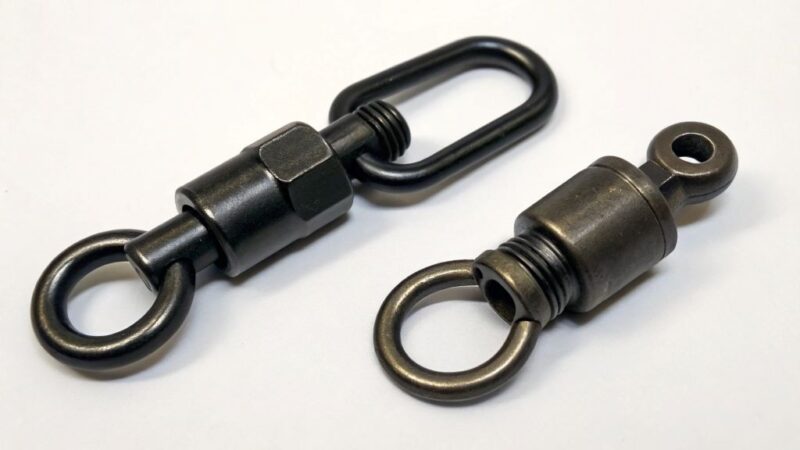
The barrel swivel is perhaps the most recognized type of fishing swivel. Its design is straightforward and effective for general fishing applications.
What it is: The barrel swivel consists of two rings connected by a short, cylindrical (barrel-shaped) body. Inside this barrel, a pin allows the two rings to rotate independently of each other.
Construction and Appearance: Typically made from brass or stainless steel, barrel swivels are simple, symmetrical, and robust in their basic form. They come in a wide range of sizes, from tiny freshwater sizes to large, heavy-duty options for offshore fishing. Finishes often include brass, nickel, or black nickel.
How it Works: When tension is applied, the central pin acts as a pivot, allowing the connected lines to spin relative to each other, theoretically neutralizing any twist.
Pros of Barrel Swivels:
- Simplicity and Availability: Barrel swivels are incredibly common and can be found in virtually any tackle shop or fishing section. They are easy to understand and use.
- Cost-Effective: Generally, barrel swivels are less expensive than their crane counterparts, especially when bought in bulk. This makes them a budget-friendly option for many anglers.
- Good Basic Twist Prevention: For many standard fishing situations – casting, bait fishing, lighter trolling – a quality barrel swivel provides sufficient line twist prevention.
- Reliability: Their simple construction means there are fewer potential points of failure compared to more complex designs. If the materials are good, they are quite durable.
Cons of Barrel Swivels:
- Rotation Efficiency Under Load: While they do rotate, the friction within the simple barrel design can sometimes hinder truly free rotation when under significant tension or torque from a strong, spinning fish or heavy lure. This means some twist can still be transferred under challenging conditions.
- Strength-to-Size Ratio: For a given breaking strain, a barrel swivel can sometimes be slightly bulkier than a comparable crane swivel, although this isn’t always a significant factor in smaller sizes.
Ideal Use Cases for Barrel Swivels:
- General freshwater fishing (bass, panfish, trout)
- Basic bait fishing rigs (Carolina rigs, slip sinker rigs)
- Connecting monofilament main lines to monofilament or fluorocarbon leaders
- Lighter casting applications with minimal lure spin
- Situations where extreme anti-twist performance isn’t the absolute top priority
Contender 2: The Engineered Performer – The Crane Swivel
The crane swivel is often considered the more advanced option, designed for enhanced performance, particularly in situations demanding superior anti-twist capabilities under load.
What it is: The crane swivel has a more distinct shape, resembling a “crane” or an elongated “T”. It consists of two rings connected by a longer body housing a more refined pin or bearing system.
Construction and Appearance: Crane swivels typically feature a longer body than barrel swivels. The internal mechanism often incorporates a more precise bearing or pin system designed to reduce friction. Like barrel swivels, they are made from brass or stainless steel and come in various sizes and finishes.
How it Works: The elongated body and more refined internal bearing/pin system allow the two ends to rotate with greater freedom and less friction, especially when under load. This makes them significantly more effective at preventing line twist caused by high torque.
Pros of Crane Swivels:
- Superior Anti-Twist Performance: This is their primary advantage. The improved design allows for smoother, more reliable rotation, even under heavy tension from powerful fish or aggressively spinning lures.
- Higher Strength-to-Size Ratio: Crane swivels are often stronger for their physical size compared to barrel swivels. This means you can use a smaller, less obtrusive swivel to achieve the same breaking strength, which can be advantageous for finesse fishing or when targeting easily spooked fish.
- Durability of Rotation: The internal mechanism is often more durable and less prone to binding under stress over time than the simple pin in a barrel swivel.
Cons of Crane Swivels:
- Cost: Crane swivels are typically more expensive than barrel swivels, especially high-quality ones with refined bearings.
- Availability (Historically): While increasingly common, in some very basic tackle sections, you might find only barrel swivels, although this is becoming less of an issue.
Ideal Use Cases for Crane Swivels:
- Trolling (especially with lures that spin or wander)
- Fishing with spinning lures (spinners, spoons)
- Heavy-duty applications targeting large, powerful fish that twist and turn extensively
- Saltwater fishing where corrosion resistance and strength are paramount
- Using live baits that spin or roll in the current
- Connecting braided lines to leaders (braid can sometimes exacerbate twist issues)
- Situations where maximum anti-twist performance is critical to prevent line failure
Direct Comparison: Barrel vs. Crane
Let’s put them head-to-head on key performance indicators:
| Feature | Barrel Swivel | Crane Swivel | Winner (Generally) |
| Anti-Twist Ability | Good (basic situations) | Excellent (under load/high torque) | Crane |
| Strength-to-Size | Good | Better | Crane |
| Cost | Lower | Higher | Barrel |
| Availability | Very high | High (increasingly) | Barrel |
| Rotation Smoothness | Can experience friction under high tension | Smoother and more reliable under load | Crane |
| Profile/Bulk | Can be slightly bulkier for equal strength | Often more streamlined for equal strength | Crane |
| Ideal Application | General fishing, lighter rigs | Trolling, spinning lures, heavy-duty, braid | Situational |
Export to Sheets
Choosing the Right Swivel for Your Rig: Factors to Consider
There’s no single “best” swivel; the right choice depends entirely on your specific fishing context. Ask yourself these questions:
- What type of fishing are you doing?
- Trolling or Using Spinning Lures/Baits: Crane swivel, hands down. The constant rotation demands the superior anti-twist power of a crane swivel to prevent major line issues.
- Casting with minimal lure spin (e.g., jigs, soft plastics): A quality barrel swivel is often perfectly adequate.
- Still Fishing with Bait: A barrel swivel is usually sufficient for basic twist prevention from current or fighting fish.
- Heavy-Duty Offshore/Saltwater: Consider high-quality crane swivels, likely made of stainless steel, for maximum strength, corrosion resistance, and reliable performance against powerful, twisting fish.
- What species are you targeting?
- Fish that spin or roll aggressively when hooked (e.g., tuna, some salmon, large catfish) will test your swivel’s anti-twist ability. A crane swivel offers better peace of mind.
- Less acrobatic fish may not put as much torque on the line, making a barrel swivel a viable option.
- What line are you using?
- Braided Line: Braid is very susceptible to twist because it has no stretch or memory. Using a crane swivel with braid is highly recommended, especially in applications prone to twist.
- Monofilament or Fluorocarbon: While still beneficial, these lines have some inherent stretch and memory which can absorb some twist. A quality barrel swivel might suffice, but a crane is still superior for high-twist scenarios.
- What is your budget?
- If cost is a major constraint for general fishing, barrel swivels offer good value.
- If you require peak performance and reliability in demanding situations, investing in crane swivels is worthwhile.
- What size and strength do you need?
- Always match the swivel’s breaking strength to your line’s breaking strength or slightly higher. The swivel should not be the weakest link in your setup (unless intentionally used as a break-away point in specific rigs).
- Consider the physical size. Smaller swivels are less visible to fish, but must still have adequate strength. Crane swivels often offer better strength in a smaller package.
Beyond Barrel and Crane: Other Swivel Types (Briefly)
While barrel and crane are the stars of this comparison, it’s worth mentioning others:
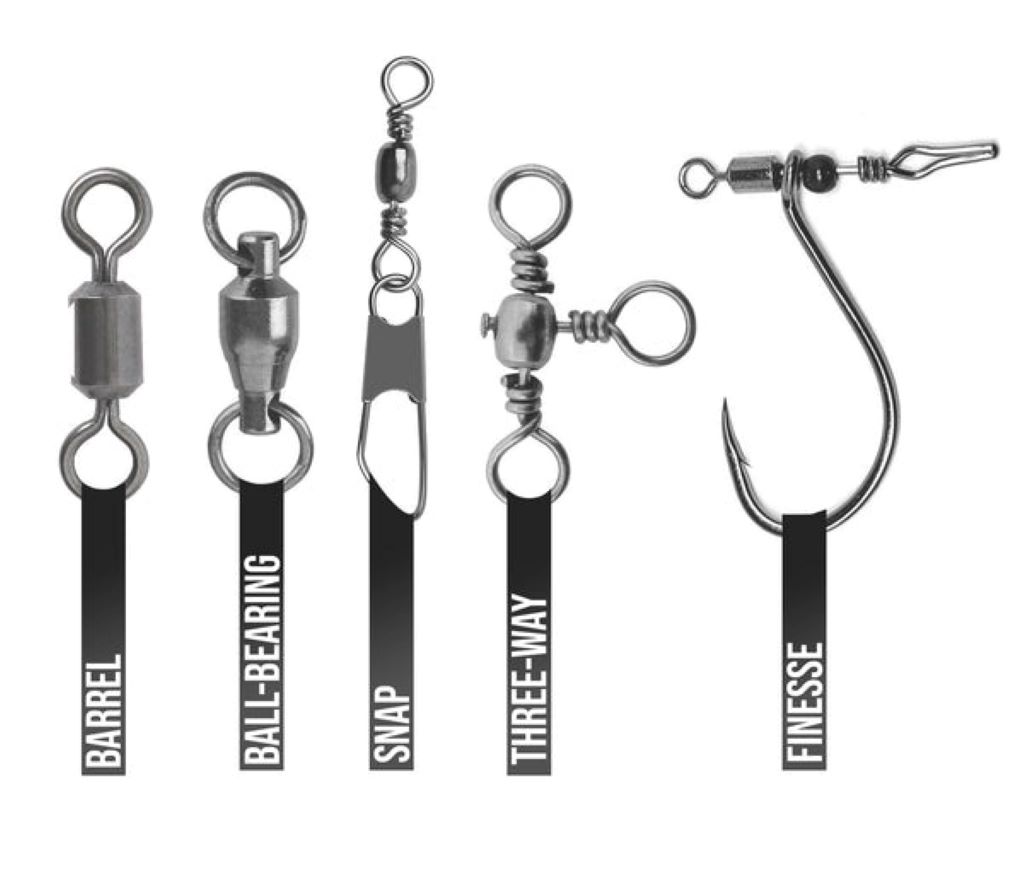
- Ball Bearing Swivels: The pinnacle of anti-twist technology. They use tiny ball bearings for incredibly smooth, frictionless rotation, even under extreme loads. They are the most expensive but offer unmatched performance for trolling and heavy-duty applications where twist is a major issue.
- Snap Swivels: These combine a swivel (either barrel or crane) with a snap clip. They are fantastic for quickly changing lures or leaders but be aware that the snap is often the weakest point. Choose high-quality snaps appropriate for your target species.
- Coastlock Swivels, Duo-Lock Swivels, etc.: These refer to the type of snap attached to the swivel, offering varying levels of security and ease of use.
Proper Swivel Usage and Maintenance
Even the best swivel won’t perform if not used correctly:
- Choose the Right Size: Don’t use an unnecessarily large swivel that could spook fish, but ensure it’s strong enough.
- Tie Proper Knots: Use strong, reliable knots specifically designed for tying line to swivels or snaps (e.g., Palomar knot, Improved Clinch knot, Uni knot). Knots tied directly to the swivel ring should cinch down securely without slipping.
- Check for Wear: Regularly inspect your swivels for signs of corrosion, bending, or reduced rotation. Replace damaged swivels immediately.
- Rinse After Saltwater Use: Saltwater is highly corrosive. Always rinse your tackle, including swivels, thoroughly with fresh water after fishing in saltwater.
Simple Fishing Rod Maintenance for Beginners: The Ultimate Guide to Keep Your Gear in Top Shape
Conclusion: Making Your Decision
The choice between a crane swivel and a barrel swivel boils down to understanding the demands of your fishing situation.
- For general, everyday fishing, casting with minimal lure spin, or simple bait rigs where cost is a factor, a quality barrel swivel is a perfectly capable and reliable choice. It’s the dependable workhorse that gets the job done for most standard applications.
- For demanding scenarios like trolling, fishing with aggressively spinning lures, targeting large and powerful fish, using braided line, or any situation where preventing line twist under heavy load is paramount, the superior rotation and strength-to-size of a crane swivel make it the clear winner. It’s the performance upgrade for when reliability under stress is critical.
Think about the potential torque your rig will experience and the consequences of line twist in your specific fishery. Investing in the appropriate swivel type, especially for crucial connections, is a small price to pay for increased confidence and fewer lost fish.
So next time you’re stocking your tackle box, don’t just grab any swivel. Consider the subtle but significant differences between the barrel and the crane, and make an informed choice that will keep your line strong and your focus on the fight!
Tight lines!
Read More: