
Fishing is one of the most rewarding outdoor activities. But many beginners make one big mistake. They choose the wrong hook. The right hook can mean the difference between a great catch and going home empty-handed. I learned this the hard way on my first solo fishing trip. I spent hours at a lake in rural Bangladesh with no luck. A local fisherman walked over and simply changed my hook. Within 20 minutes, I had my first catch. That experience changed everything for me.
Choosing the right hook matters more than most people think. The size, shape, and style of your hook all affect your results. Before you head to the water, take a look at these fishing hooks to see practical, affordable options for every type of fishing situation. Once you understand the basics, picking the right hook becomes much easier.
Why Hook Selection Matters So Much
Most anglers spend a lot of time picking the right rod or reel. However, they overlook the hook. That is a big mistake. The hook is the only part of your gear that directly connects you to the fish. If it does not match the fish you are targeting, you will lose your catch. It is that simple.
Hook selection affects several important things:
- How well the bait stays in place
- Whether the fish can feel the hook and spit it out
- How deeply the hook sets when you pull
- Whether the hook is strong enough for the fish’s weight
Additionally, using the wrong hook can damage the fish. This is a concern for anyone who practices catch and release. A hook that is too large can cause unnecessary injury. A hook that is too small may not hold the fish long enough to reel it in. Therefore, matching the hook to the fish species is not just about catching more fish. It is also about being a responsible angler.
Understanding Hook Sizes and How They Work
Hook sizes can be confusing at first. The numbering system seems backwards to most beginners. Smaller numbers mean larger hooks. For example, a size 1 hook is bigger than a size 8 hook. However, once you get past size 1, the system flips. A 1/0 hook (said as “one-aught”) is bigger than a size 1. A 10/0 hook is one of the largest available.
Here is a simple size guide to help you start:
- Size 14 to Size 8: Small hooks for panfish, trout, and crappie
- Size 6 to Size 2: Medium hooks for bass, walleye, and catfish
- Size 1 to 2/0: Larger hooks for pike, striped bass, or large catfish
- 3/0 to 10/0: Very large hooks for offshore species like tuna or marlin
The wire thickness of the hook also matters. Thin-wire hooks work best with live bait because they cause less damage. Thick-wire hooks hold up better against strong fighters like saltwater fish.
Therefore, before you buy a hook, always check the fish species you plan to target. Read the packaging carefully. Most quality hooks will list which species they are designed for.

The Most Common Hook Types Explained
There are many different hook styles. Each one is made for a specific fishing situation. Here is a breakdown of the most popular types and when to use them.
J-Hooks
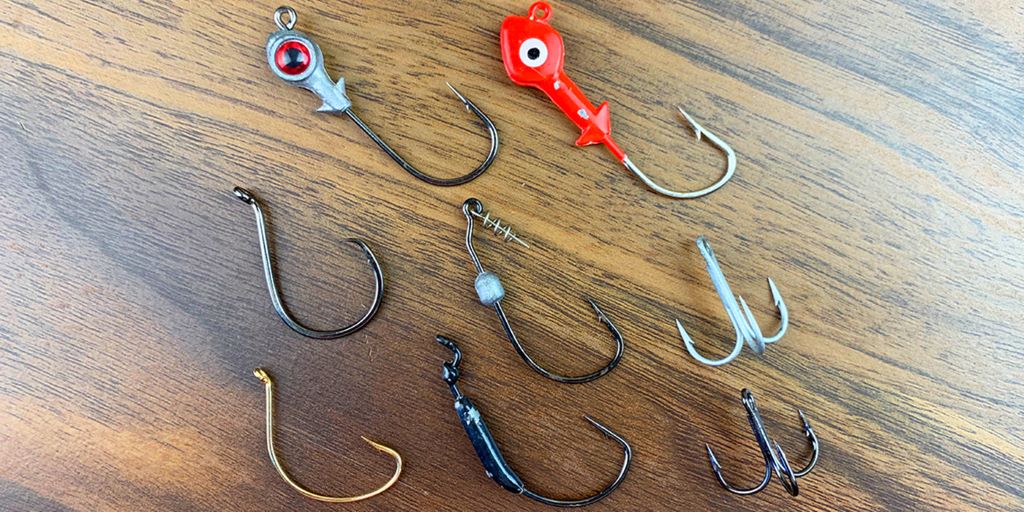
The J-hook is the most classic design. It looks exactly like the letter J. This hook works well for almost every type of fishing. You can use it with live bait, cut bait, or soft plastic lures. J-hooks are great for beginners because they are easy to use. However, they require a strong hook set. You need to pull back sharply when a fish bites.
Circle Hooks
Circle hooks have a curved tip that points inward. They are designed to hook the fish in the corner of the mouth. This makes them ideal for catch and release fishing. The hook sets itself when the fish swims away. You do not need to set the hook manually. Additionally, circle hooks reduce deep hooking, which protects the fish’s internal organs. Many fishing regulations in the U.S. now require circle hooks when fishing for certain species like red snapper.
Treble Hooks
A treble hook has three points attached to a single shank. These hooks are commonly used with artificial lures like crankbaits and topwater plugs. The three points increase the chances of hooking a fish that strikes but misses the first point. However, treble hooks can cause more injury to fish. Therefore, many conservation-focused anglers replace them with single hooks or barbless options.
Worm Hooks (Offset Hooks)
Worm hooks are made specifically for soft plastic baits like rubber worms. They have a bent shank that allows the plastic to sit straight and look natural in the water. These hooks are a favorite among bass anglers. They work especially well in areas with heavy weeds and brush, where other hooks might snag on vegetation.
Choosing Hooks for Specific Fish Species
Now let us get into the details. Different fish have different mouth sizes and feeding habits. The hook needs to match the fish you are targeting.
Trout
Trout have smaller mouths and are cautious feeders. Use a size 8 to 12 hook for most trout fishing. A light wire hook works best because it allows live bait to move naturally. Circle hooks or small J-hooks both work well. Use baits like worms, small minnows, or salmon eggs.
Bass
Bass are aggressive and have larger mouths. For largemouth bass, a 2/0 to 4/0 worm hook is a popular choice. For smallmouth bass, a slightly smaller hook works better. Bass anglers often use offset worm hooks with soft plastic lures. Treble hooks are also common on lures like crankbaits and swimbaits.
Catfish
Catfish are strong bottom-dwellers. They have a tough, leathery mouth. Use a size 2/0 to 8/0 circle hook for catfish. Circle hooks are especially popular for catfish because you can leave the rod in a holder. When the catfish picks up the bait and swims, the hook sets itself. Cut bait, chicken liver, and stink baits work well on these hooks.
Panfish (Bluegill, Crappie, Perch)
These smaller fish need small hooks. A size 6 to 10 hook is usually the right choice. Use a thin-wire hook so it does not weigh down your live bait. Small J-hooks with a piece of nightcrawler or a small minnow work perfectly for panfish.
Saltwater Fish
Saltwater fishing requires stronger, corrosion-resistant hooks. Look for stainless steel or nickel-plated options. For smaller species like flounder or snook, a 1/0 to 3/0 circle hook works well. For larger offshore species like tuna or mahi-mahi, use a 6/0 to 10/0 hook. The Recreational Boating and Fishing Foundation recommends matching your hook to the size of the bait as a general rule for saltwater fishing.
Hook Materials and Coatings: What to Look For
The material your hook is made from affects its strength, sharpness, and lifespan. Here is what to know before buying.
Carbon steel hooks are the sharpest and most affordable. However, they rust quickly in saltwater. They work best for freshwater fishing. Stainless steel hooks last much longer in saltwater but can be harder to sharpen. High-carbon steel hooks offer a good balance of sharpness and strength for most situations.
Many modern hooks also come with special coatings:
- Tin coating: Reduces rust in freshwater; affordable
- Black nickel coating: Very sharp, good for both fresh and saltwater
- Bronze coating: Classic coating, good for freshwater only
- Teflon or chemically sharpened tips: Super sharp right out of the package
Always check that your hook is sharp before using it. Run the tip lightly across your fingernail. If it slides, it is too dull. If it catches slightly, it is sharp enough. A dull hook will cost you fish. Replace hooks that no longer hold a sharp edge.
Tips for Beginners Picking Their First Hooks
If you are just starting out, keep things simple. Here are a few easy tips to follow:
- Start with size 6 or size 8 J-hooks. They are versatile and work for many fish.
- Buy a variety pack that includes several sizes. This gives you options on the water.
- Always match hook size to bait size, not just to the fish.
- For kids and beginners, circle hooks are the safest and most forgiving choice.
- Replace rusty or bent hooks immediately. They are not worth the risk of losing a fish.
- Keep a small hook file or sharpener in your tackle box at all times.
Additionally, do not overthink it. Even experienced anglers go back to basics when they are unsure. A simple hook, the right size bait, and patience will catch fish in most situations.
Conclusion
Choosing the right fishing hook is one of the most important skills any angler can learn. It does not matter how good your rod is or how expensive your reel is. If your hook is wrong for the fish, you will struggle. Start by understanding hook sizes. Then learn the basic styles. After that, match everything to the fish species you are targeting.
Remember, fishing is about enjoying the process. The more you fish, the better your instincts will become. The local fisherman who helped me on that early fishing trip did not need a guide. He just understood his fish and his hooks. With the right knowledge, you can do the same.
Did this guide help you? Share this article with a fellow angler who might need it. And if you have your own tips or questions about choosing fishing hooks, leave a comment below. We would love to hear from you.
Frequently Asked Questions
H3: What size fishing hook should a beginner start with?
A size 6 or size 8 J-hook is a great starting point. These sizes work for many common freshwater fish, including bass, trout, and panfish.
H3: What is the difference between a circle hook and a J-hook?
A circle hook sets itself in the corner of the fish’s mouth as the fish swims away. A J-hook requires you to set it manually with a sharp pull. Circle hooks are better for catch and release fishing.
H3: Do fishing hooks come in different materials?
Yes. The most common materials are carbon steel, stainless steel, and high-carbon steel. Stainless steel is best for saltwater fishing because it resists rust.
H3: How do I know if my fishing hook is sharp enough?
Run the hook tip lightly along your fingernail. If it slides without catching, it is too dull. If it catches slightly, it is sharp and ready to use.
H3: Can I use the same hook for both freshwater and saltwater fishing?
Not always. Freshwater hooks can rust quickly in saltwater. For saltwater fishing, use stainless steel or specially coated hooks designed to handle salt exposure.


